Few plants trigger more concern than a sickly olive tree. Bare branches, leaf drop, no growth — often followed by the question: “Is my olive tree dying?”
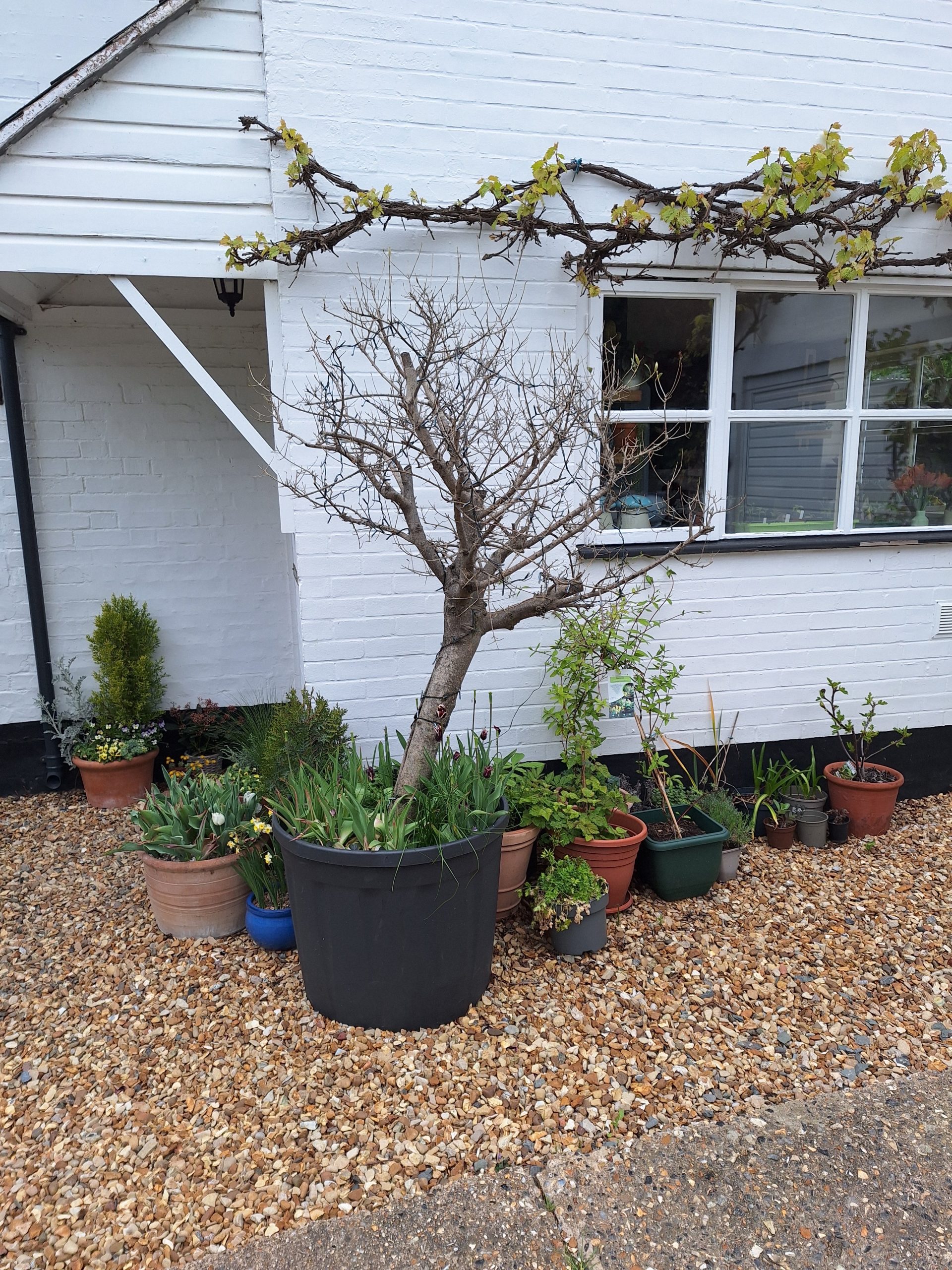
Before panic sets in, there are two simple checks I always ask people to make. They tell you very quickly whether your olive tree can be rescued — and what needs to happen next.
The First Question: How Was It Watered Over Summer?
If your olive tree is in a pot, summer watering is absolutely critical.
Olive trees are drought tolerant once established in the ground, but a potted olive relies entirely on you. In warm weather, pots dry out fast — far faster than most people realise. A common mistake is watering occasionally, or assuming rain has done the job.
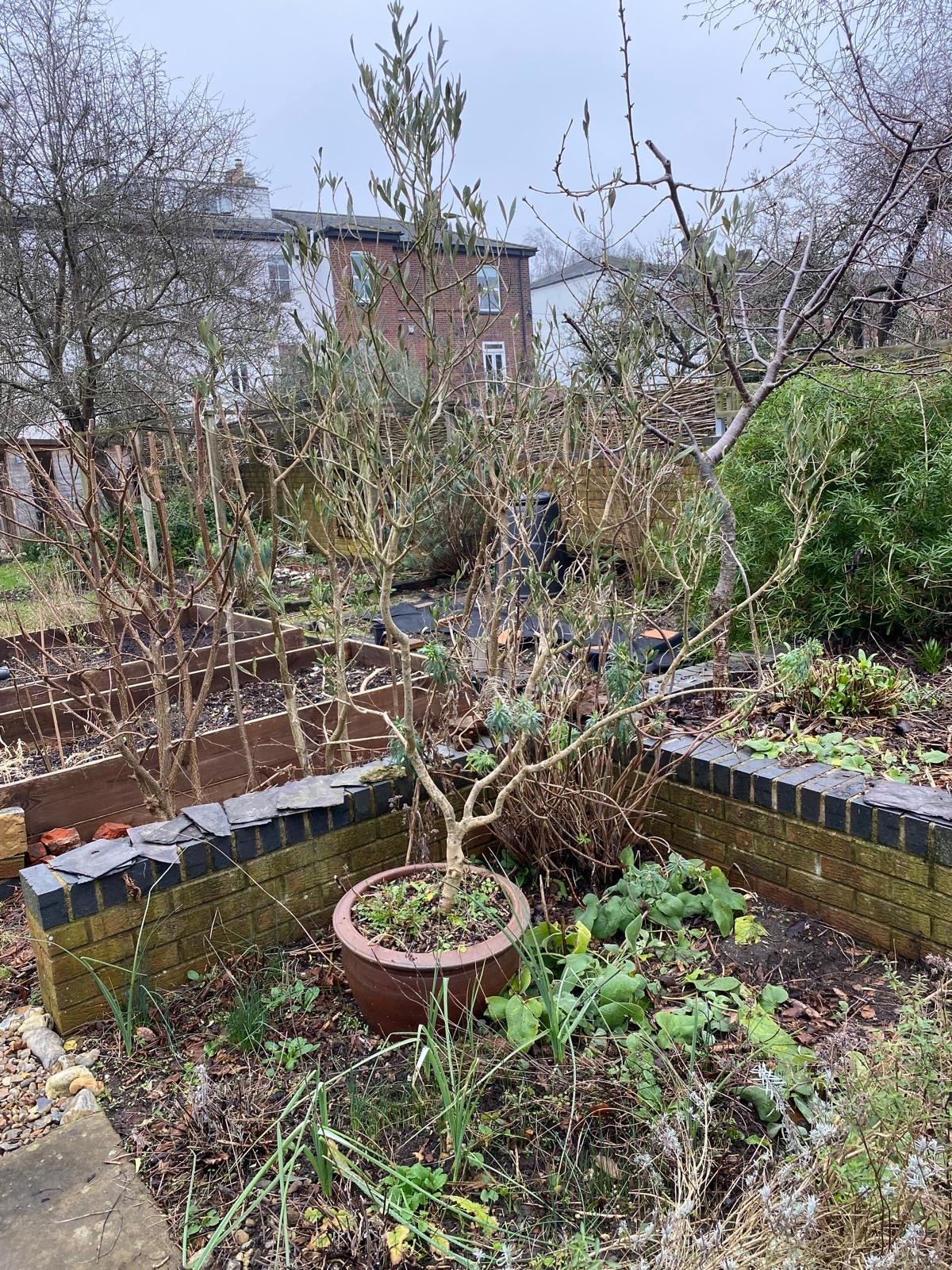
Repeated drying out stresses the tree, damages fine feeder roots, and often doesn’t show until months later. By the time leaves yellow or drop, the decline has already begun.
This is why many olive trees look “fine” one year and suddenly deteriorate the next.
If watering has been inconsistent, the solution is usually to repot into fresh compost or, better still, plant the tree into the ground where moisture levels are far more stable.
The Most Important Test: Scratch the Trunk
The next check is simple — and decisive.
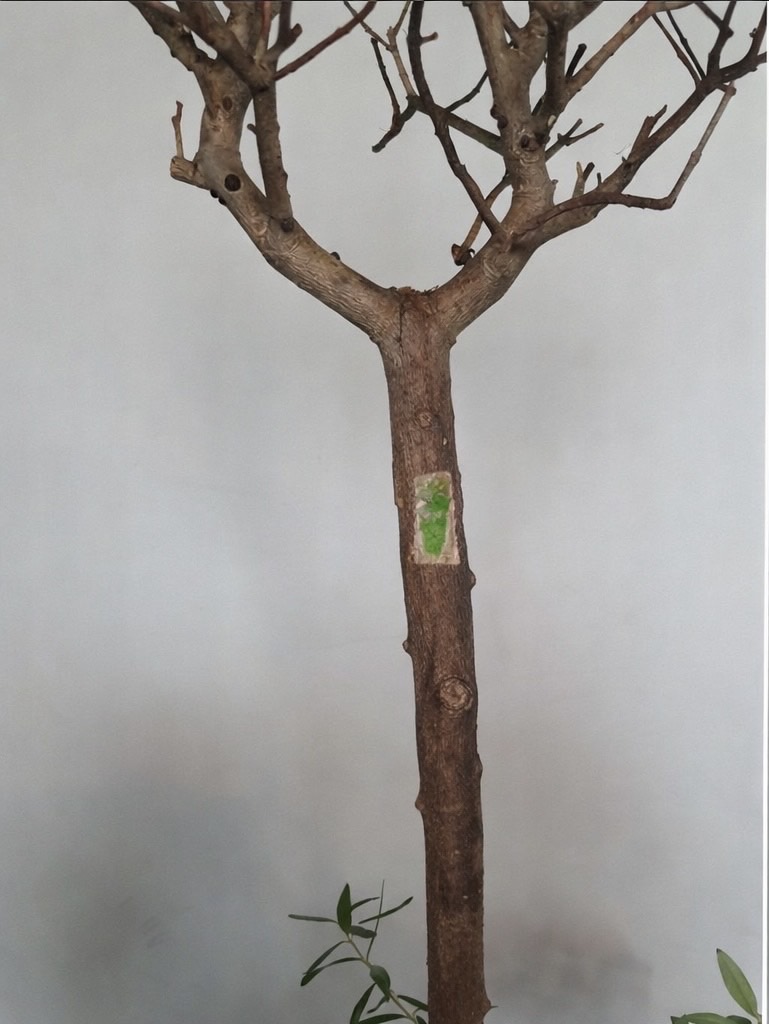
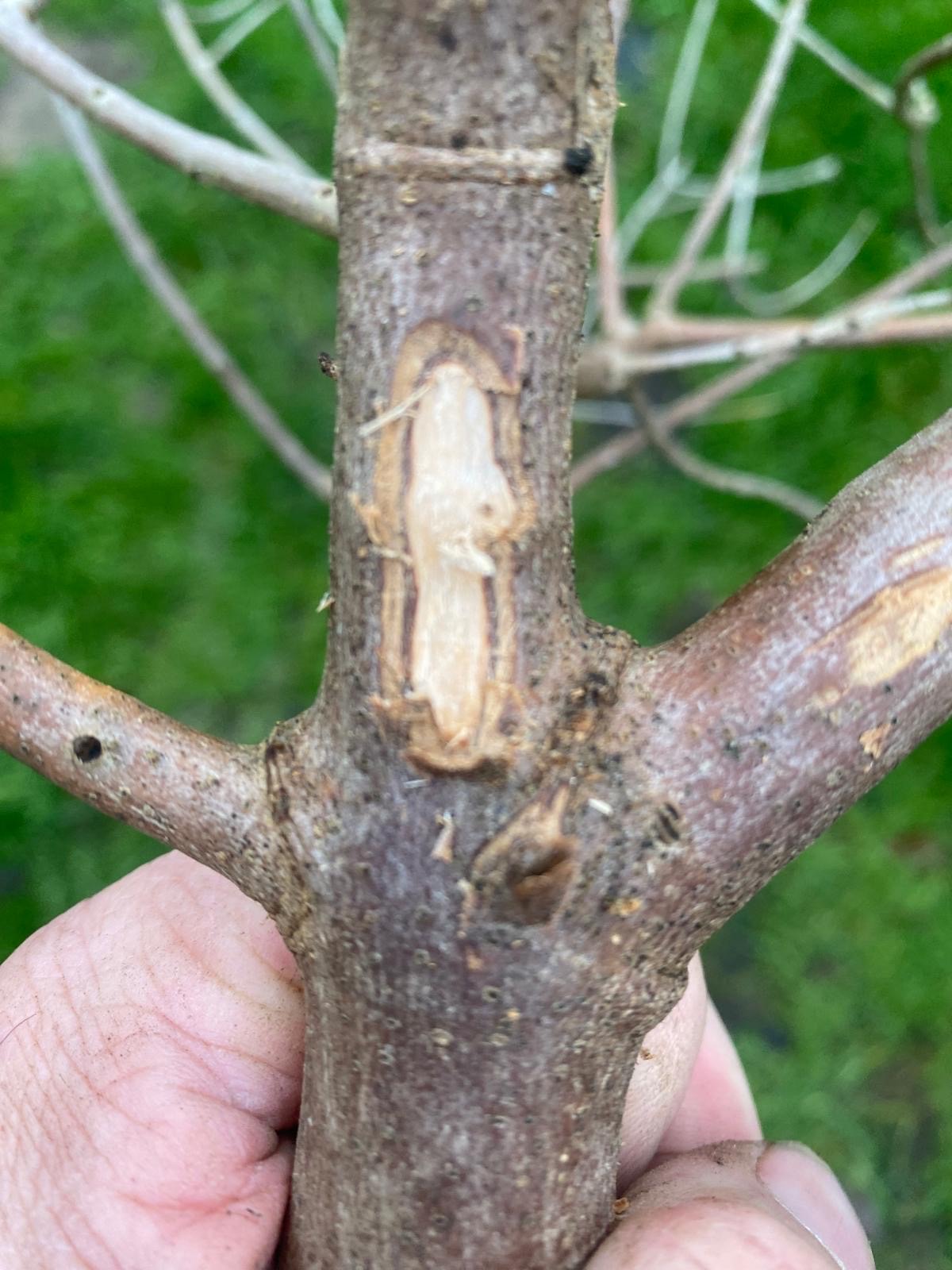
Lightly scratch the bark on the trunk or a main branch with your fingernail or a knife.
- Green underneath?The tree is alive. It may look poor, but it can be rescued with correct aftercare.
- Brown and dry underneath?That section is dead. Extensive brown wood usually indicates prolonged neglect rather than disease.
This test removes guesswork and helps set realistic expectations.
Repot or Plant Out?
If the tree is alive and currently in a pot, repotting into a slightly larger container with fresh, free-draining compost can buy time. However, long-term, olive trees are always happiest planted out in the ground.
Planting out gives roots space, insulation, and consistent access to moisture — all things pots struggle to provide.
A Final Honest Note
Many of the emails I receive are from people who didn’t buy their olive tree from us — and that’s absolutely fine. I’m always happy to help, time permitting, we are after all a very small family business.
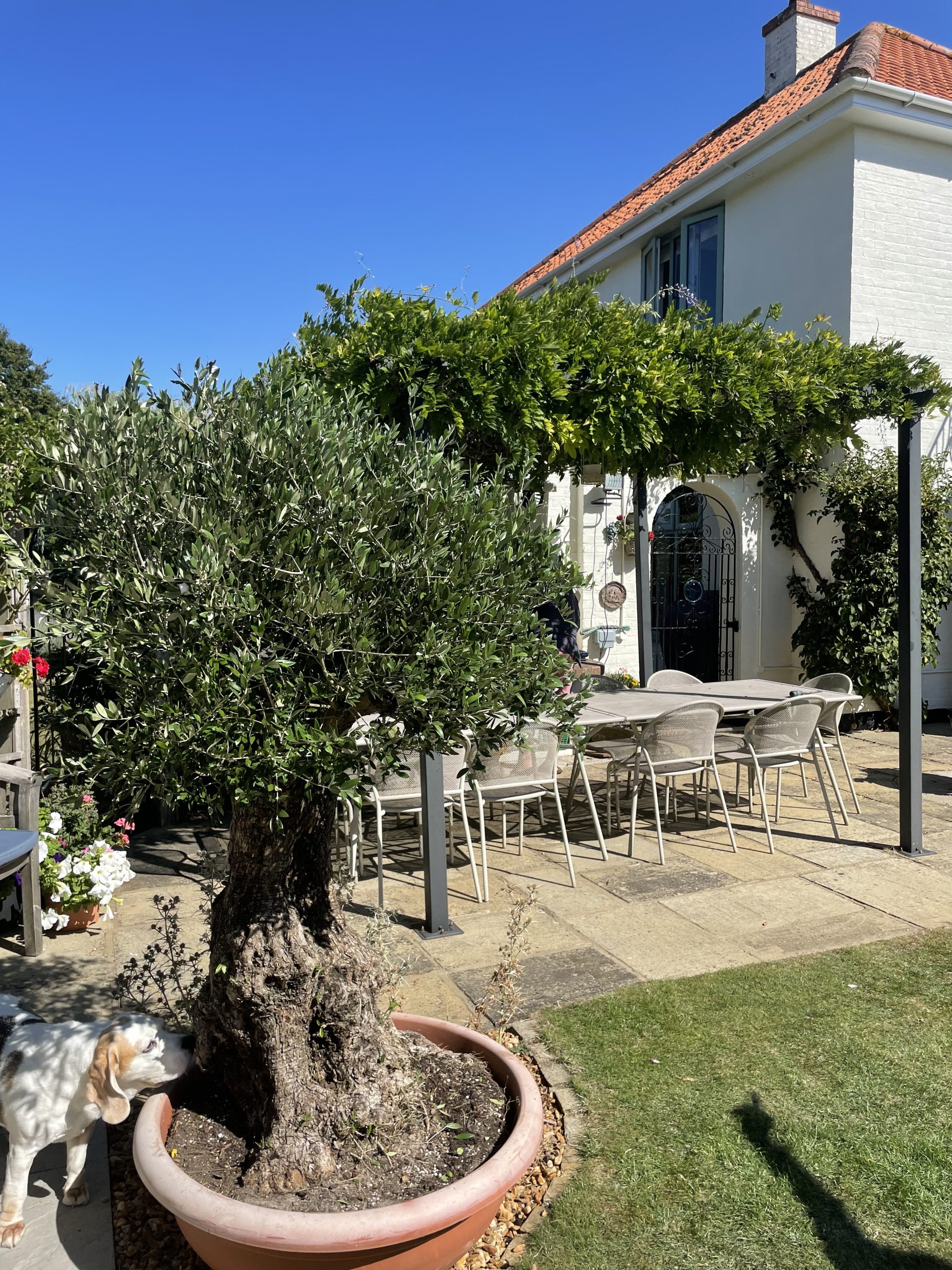
Olive trees are forgiving only up to a point. We give our clients very clear advice upon purchase; it’s usually delayed action that causes irreversible decline.
If you act while the trunk is still green, there is almost always hope.