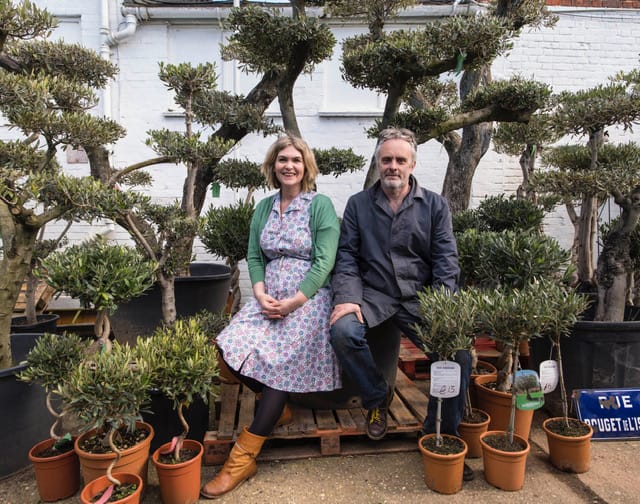
Welcome to our FAQ page! Here you’ll find answers to some of the most common questions about our olive trees, plant care, delivery options, and more. Whether you’re a first-time buyer or a returning customer, we’re here to make your experience with The Norfolk Olive Tree Company as smooth as possible.
Can’t find what you’re looking for? Feel free to get in touch — we’re always happy to help!
All visits are by appointment only. Antonia is available to arrange a visit to our beautiful nursery on the outskirts of Norwich.
To book an appointment please contact us on 07766730893 or email us [email protected]
If your olive tree is losing leaves, it’s often due to underwatering—especially if it’s in a pot. Olive trees need regular watering during the growing season (spring to autumn), and this is especially important for trees in containers or recently planted in the ground.
To help your olive tree recover:
Water consistently, especially during hot, dry spells.
Feed with a high-potassium fertiliser like tomato feed in spring and late summer.
Prune dead or damaged branches to encourage healthy regrowth.
Leaf loss can also occur naturally in winter or after environmental stress. With proper care, your tree should bounce back.
Black or purple spots on olive tree leaves are likely caused by Peacock Spot — a common fungal disease in the UK. It usually appears during damp, cool weather.
To treat Peacock Spot:
Apply Vitax Bordeaux Mixture in autumn and again in early spring to prevent infection.
Remove fallen, infected leaves to stop the fungus spreading.
Ensure good airflow around the canopy by pruning if needed.
Early treatment and good hygiene can keep your olive tree healthy all year round.
Olive trees are hardy and well suited to UK gardens. They can tolerate temperatures down to around -7°C without protection. At The Norfolk Olive Tree Company, we only recommend using fleece if there’s a sustained cold spell below -10°C.
To keep your olive tree thriving:
Choose a sunny, sheltered spot.
Avoid waterlogged soil in winter.
Only wrap with fleece during prolonged severe cold.
Olive trees are surprisingly resilient — with minimal winter protection, they will grow and thrive beautifully in most UK climates.
Olive trees prefer free-draining soil, ideally sandy or loamy with added grit. Heavy clay should be improved with sharp sand and compost to prevent root rot.