Rainy Days, Big Plans: Why Winter Is the Perfect Time to Think About Screening Olive Trees & Palms
As the rain drums gently on the windows and the garden settles into its winter hush, now is the moment many of us finally look outside and notice the gaps. The spots where the neighbour’s shed suddenly appears. The corner where the fence ends. The place where privacy disappears as soon as the leaves fall from deciduous trees.
Winter has a way of revealing the real structure of a garden — and with it, the perfect opportunity to rethink it.
At The Norfolk Olive Tree Company, we believe winter is the season for planning. While nature rests, we can dream, design, and choose the evergreen screening trees that will bring privacy, texture, and beauty back to our gardens. And few trees do this better — or more elegantly — than olive trees and hardy palms.
This is your guide to choosing screening trees in winter, and why olive trees (and certain palms) offer the year-round structure your garden deserves.
Why Winter Is the Best Season for Garden Planning
You can learn more about your garden in winter than at any other time.
In summer, plants are lush, everything is in leaf, and even the least perfect spots look forgiving. But winter strips things back, showing:
- Where you lack privacy
- Where wind funnels through
- Where you need height or structure
- Where a screen would soften boundaries
The rain also shows you the garden’s natural drainage patterns — something incredibly useful when positioning trees.
When customers come to us in November, December and January, they’re often making the most informed decisions of the year. Winter clarifies what your garden needs. Spring lets you plant it.
The Power of Evergreens in a Bare Landscape
Let’s face it — a bare deciduous tree in December can look a little depressing.
But the olive?
The olive stands proud. Still, silver-green, quietly dignified.
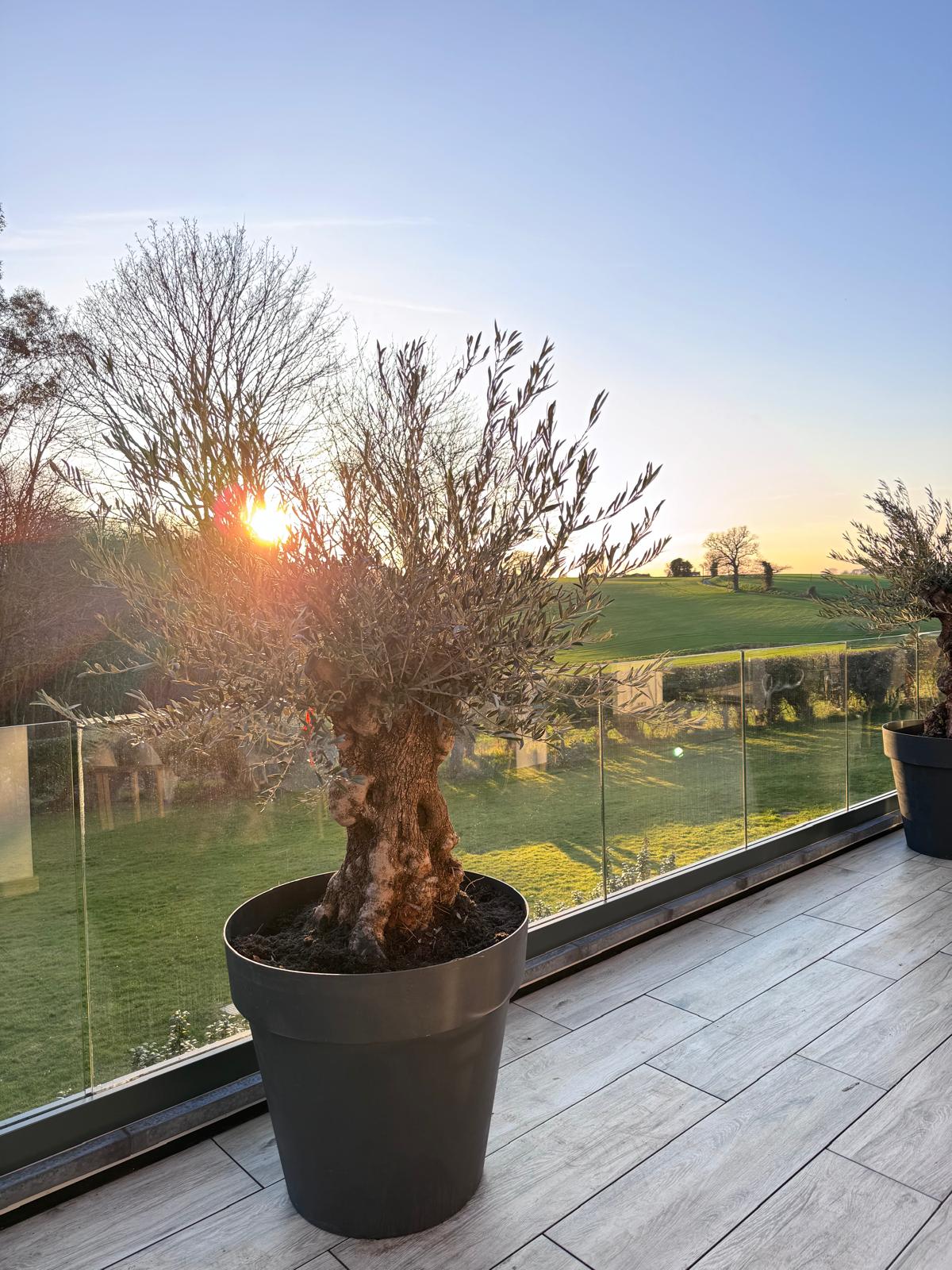
Olive trees offer winter structure, texture and subtle colour when everything else sleeps. They hold their form through storms, frost, and bleak days, offering a gentle reminder that spring will return. It’s a tree that feels hopeful even in the darkest months.
This makes them exceptional screening trees for UK gardens — particularly when you want privacy and beauty all year long.
Why Olive Trees Make Excellent Screening Trees in the UK
Olive trees aren’t just beautiful — they’re hardworking.
✓ Evergreen foliage for year-round privacy
While deciduous screens shed all their leaves, olives stay lush and full, keeping your garden secluded through winter.
✓ Naturally architectural forms
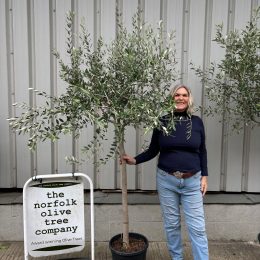
Their tall, slim trunks and dense canopies work brilliantly where space is tight — especially in urban gardens where sideways room is limited.
✓ Proven UK hardiness
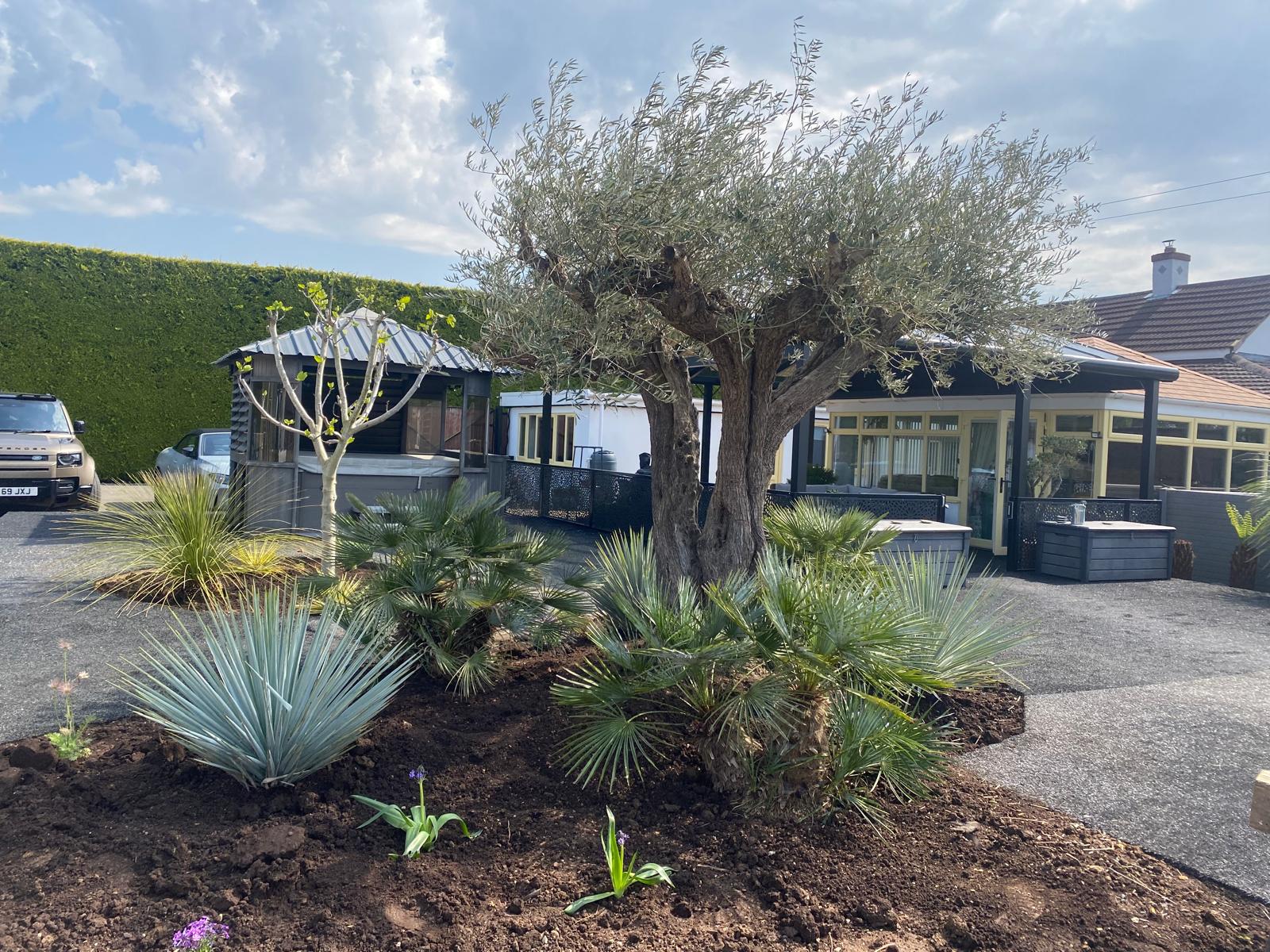
Many of our trees have been growing outside in Norfolk through multiple winters. They’re not Mediterranean imports needing mollycoddling — they’re hardy, established and acclimatised.
✓ Ideal for wind breaks and softening boundaries
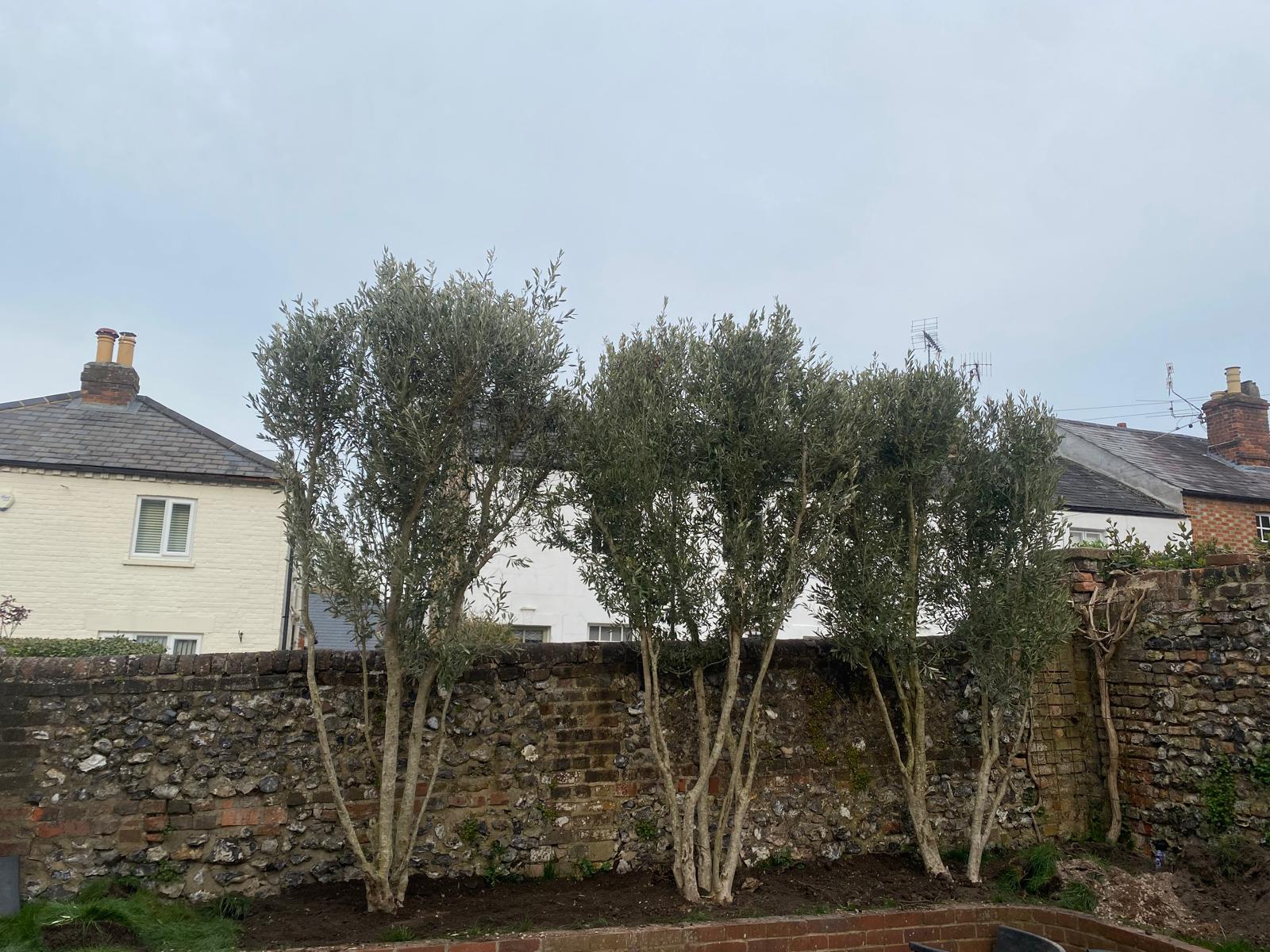
A line of tall olives can transform the look and feel of a boundary instantly.
Our recommended screening olives:
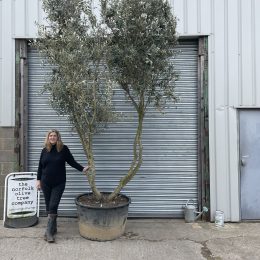
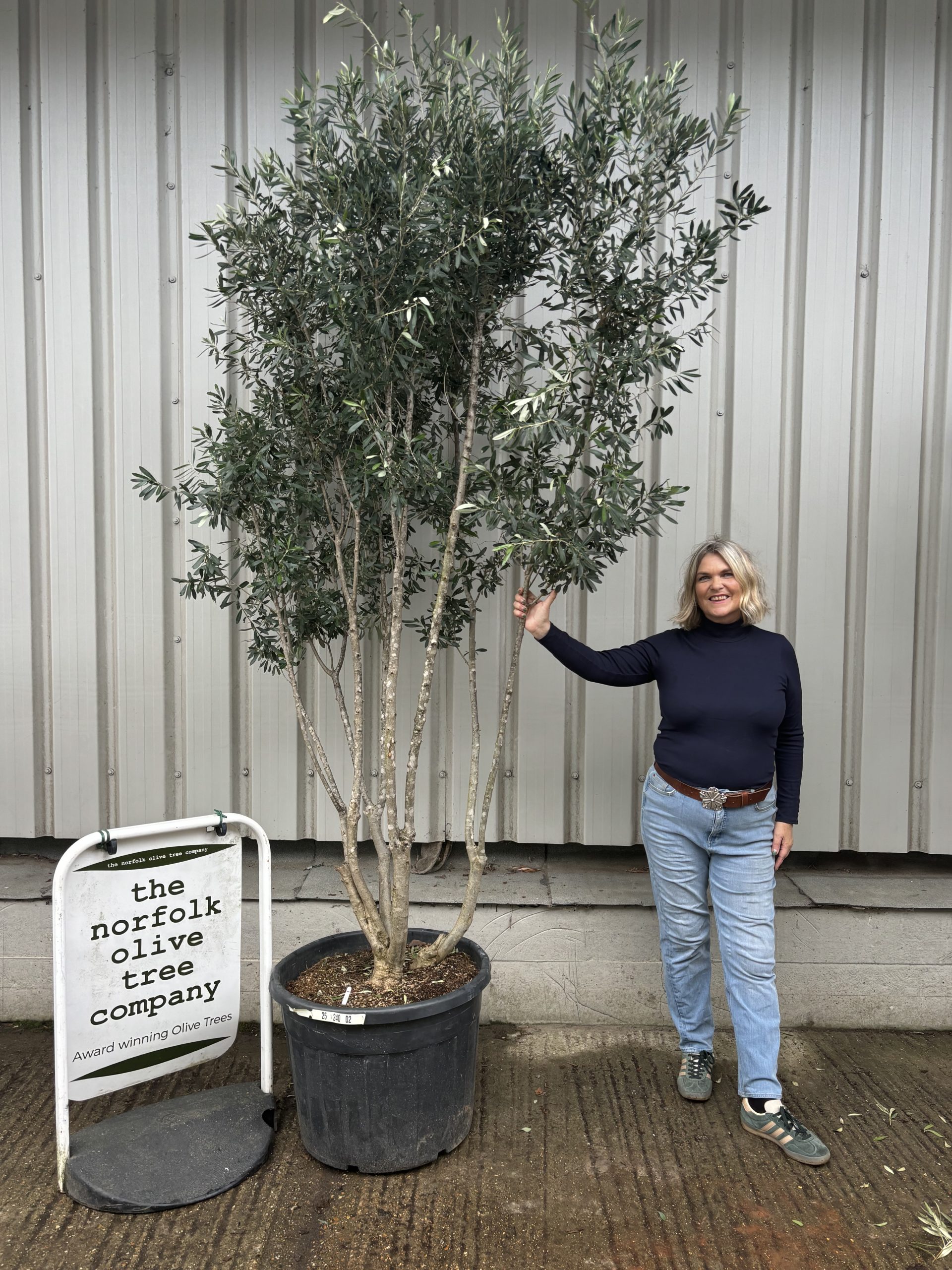
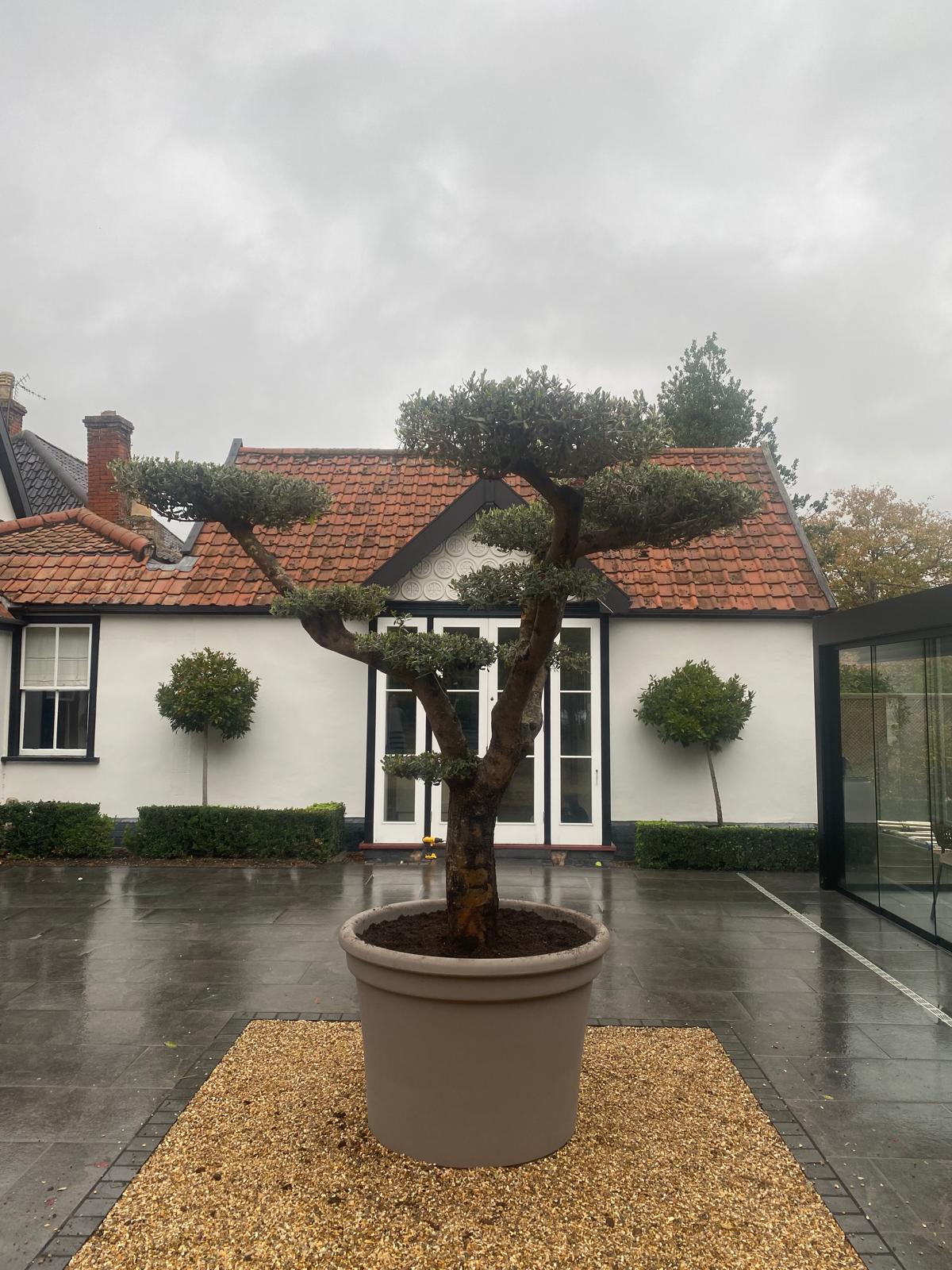
- Tall Ancient Olive Tree GT613
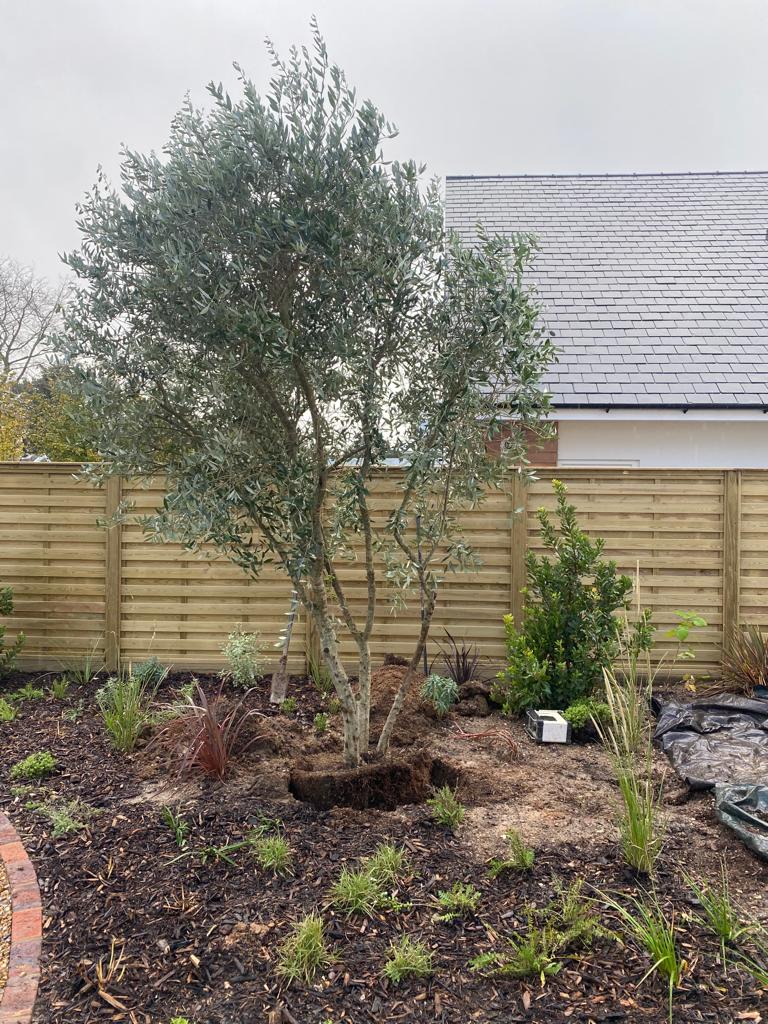
- Multi-Stem Olive Tree P612
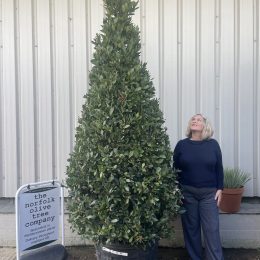
- Pair of Tall Cone-Shaped Olive Trees 3.8m (12.5ft) Once Planted
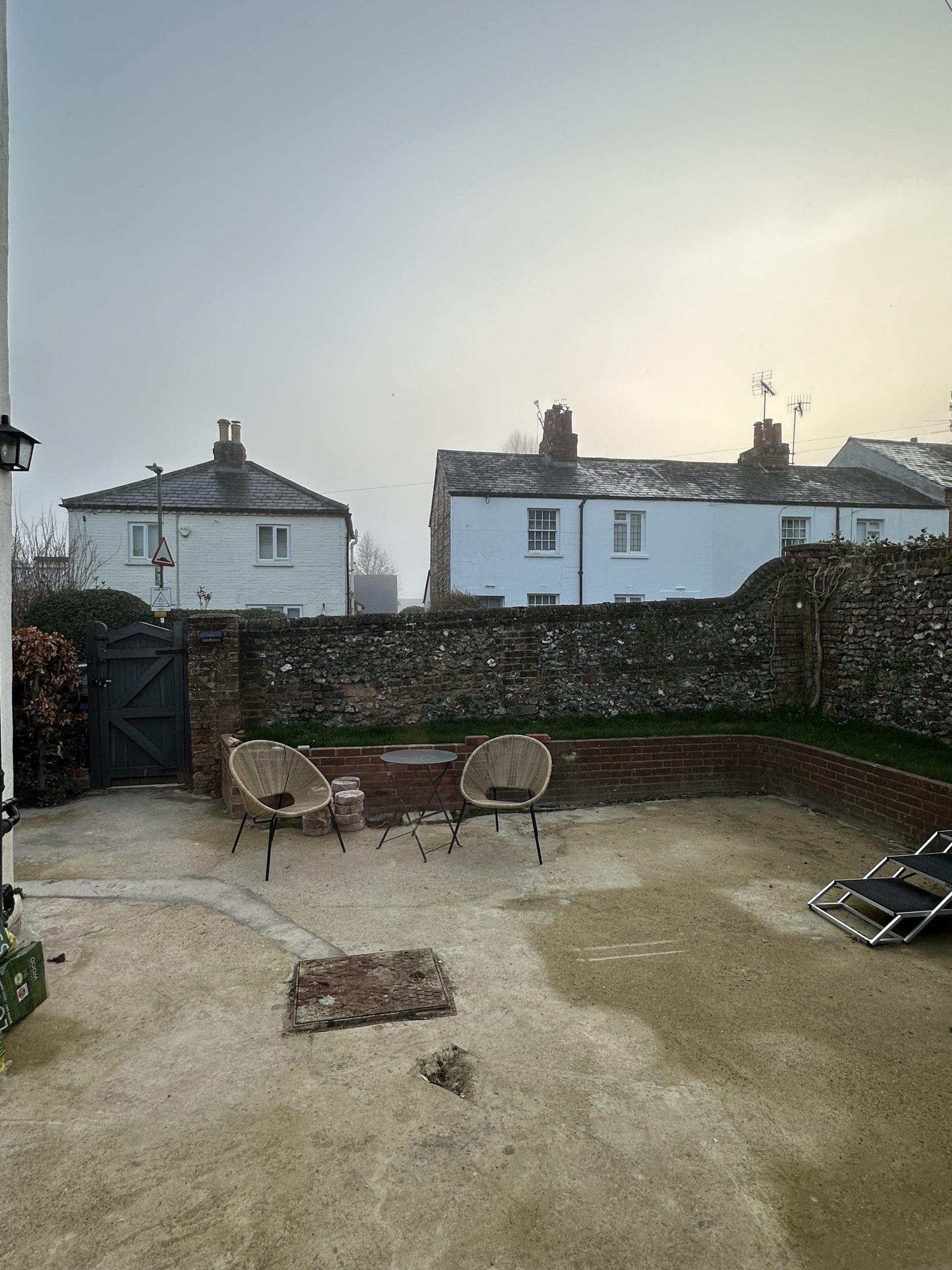
Each offers height, presence, and elegance — perfect for creating natural privacy.
Palms for Screening: An Unexpected Winter Winner
When customers think of hardy screening trees, palms often surprise them.
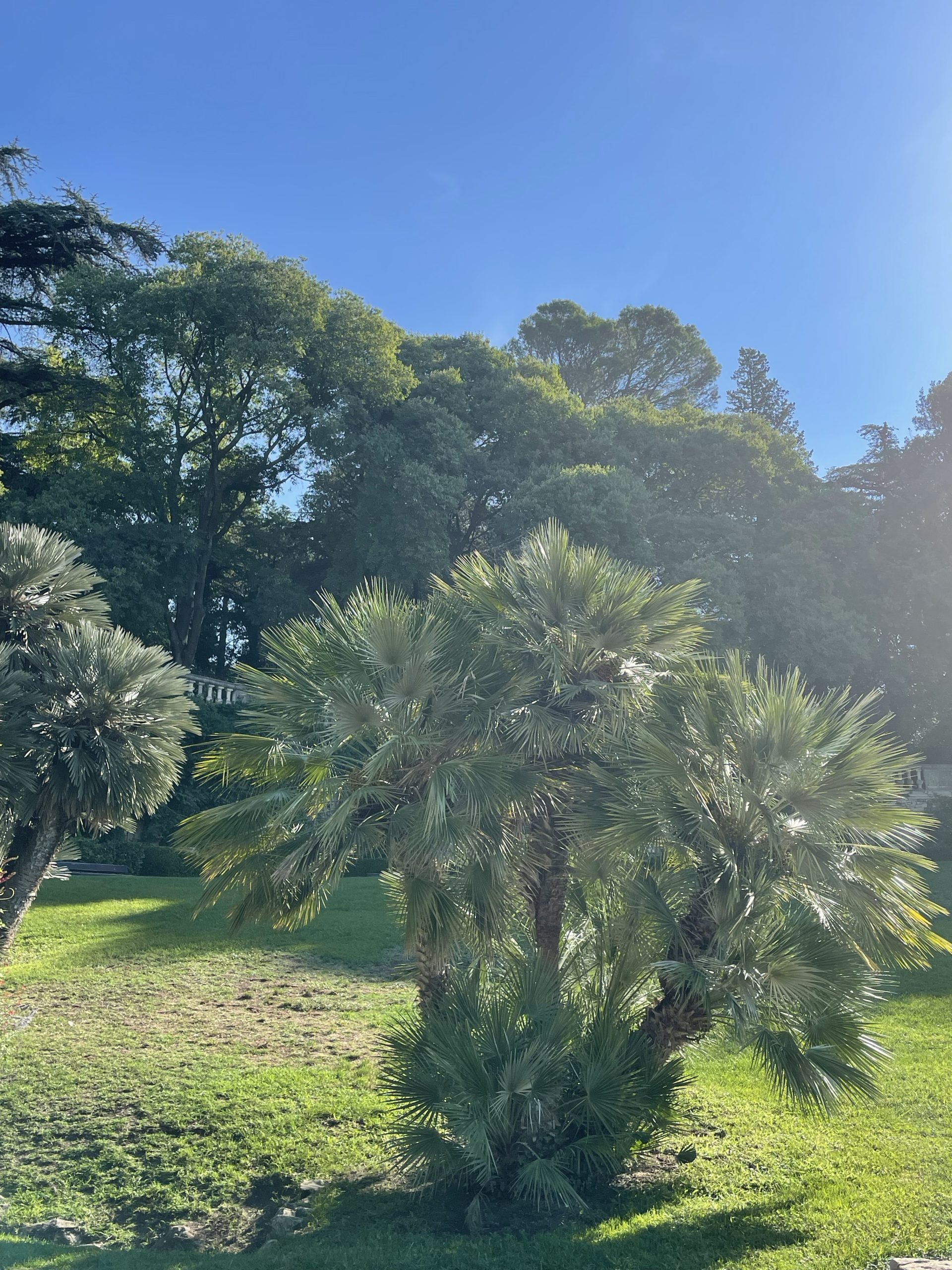
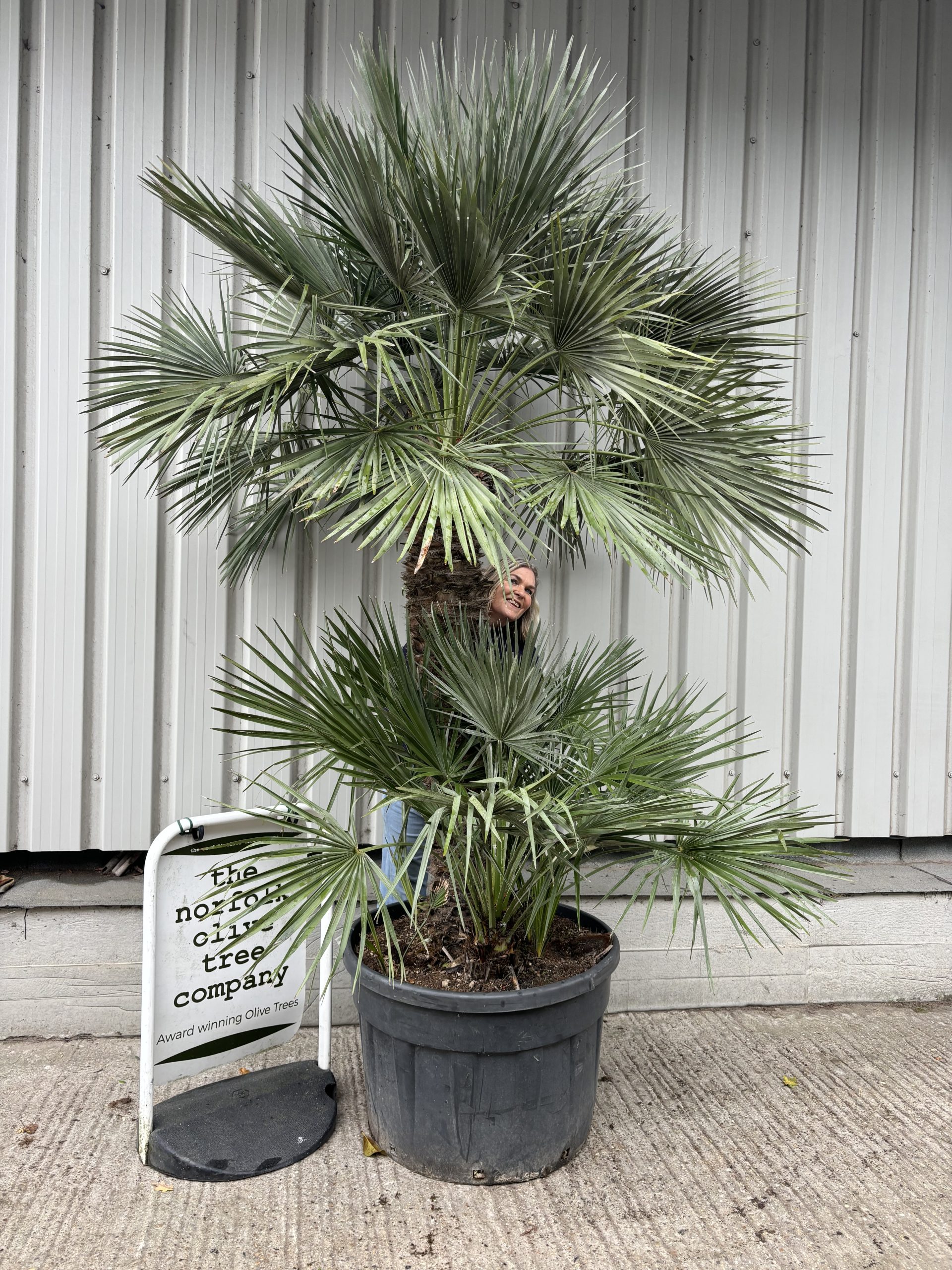
But the Trachycarpus fortunei (Windmill Palm) is one of the hardiest palms in the world and thrives in UK gardens — even wet ones.
Why palms work beautifully in winter:
- They’re evergreen
- The gently arching fronds bring movement on still, grey days
- They create instant height and drama
- They pair wonderfully with olives for a contemporary look
Palms also stand up extremely well to winter rain, making them a strong choice for damp or exposed sites.
If you’re considering adding more structure or height in spring, winter is the time to secure your chosen palms.
When to Plant Screening Trees (and When to Wait)
Planting Olive Trees
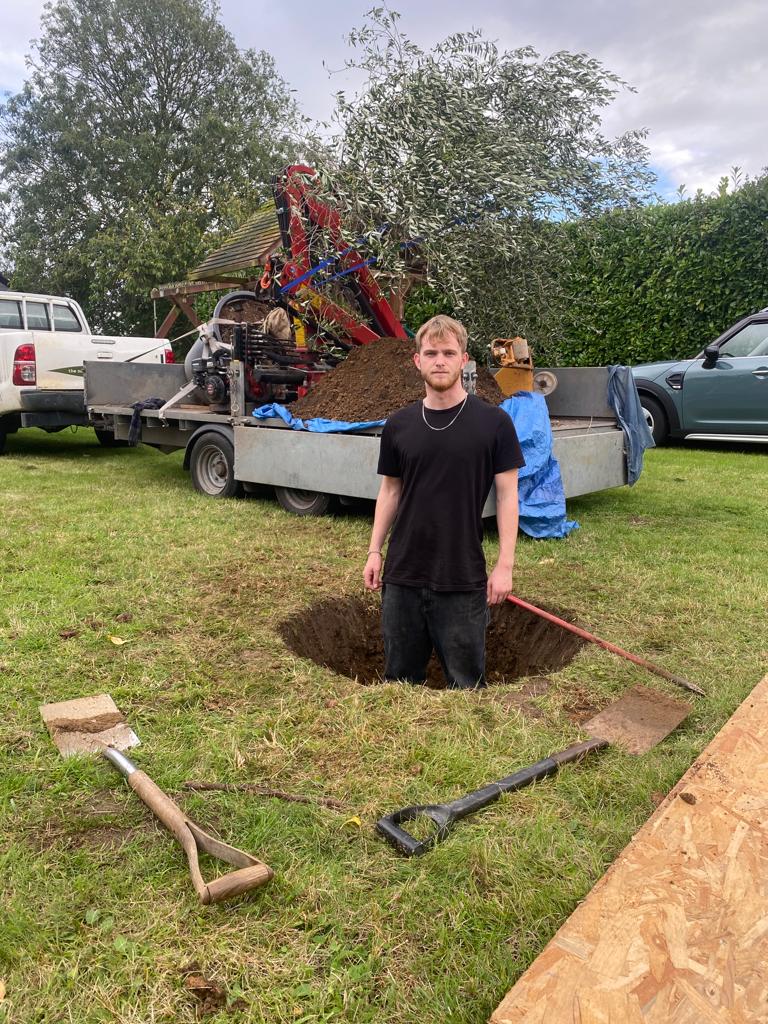
You can plant olives during mild winter spells as long as the ground isn’t frozen. Their roots appreciate the natural moisture, and they settle quietly into place until spring growth begins.
Planting Palms
For palms, it’s best to wait until early spring.
However, ordering now ensures you can reserve the exact size and shape you want — our big architectural specimens often go quickly.
Many customers purchase in winter and book spring planting with us.
Winter Maintenance Tips for Screening Trees
While olives and palms are relatively low-maintenance, a few winter care steps help keep them at their best:
✓ No watering until March
The rain is doing all the work for you. Overwatering is the bigger risk.
✓ Lift container trees onto pot feet
This prevents waterlogging.
✓ Check for wind exposure
Tall trees may need temporary winter support if positioned in a windy spot.
✓ Remove fallen wet leaves from the base
This reduces fungal pressure and keeps air circulating.
Why Now Is the Time to Plan Your Garden’s Green Screens
While the weather keeps us indoors, this is the moment to look out at the garden and imagine what it could become by spring.
A row of tall olives offering privacy from the moment you step outside.
A pair of dramatic palms flanking the terrace.
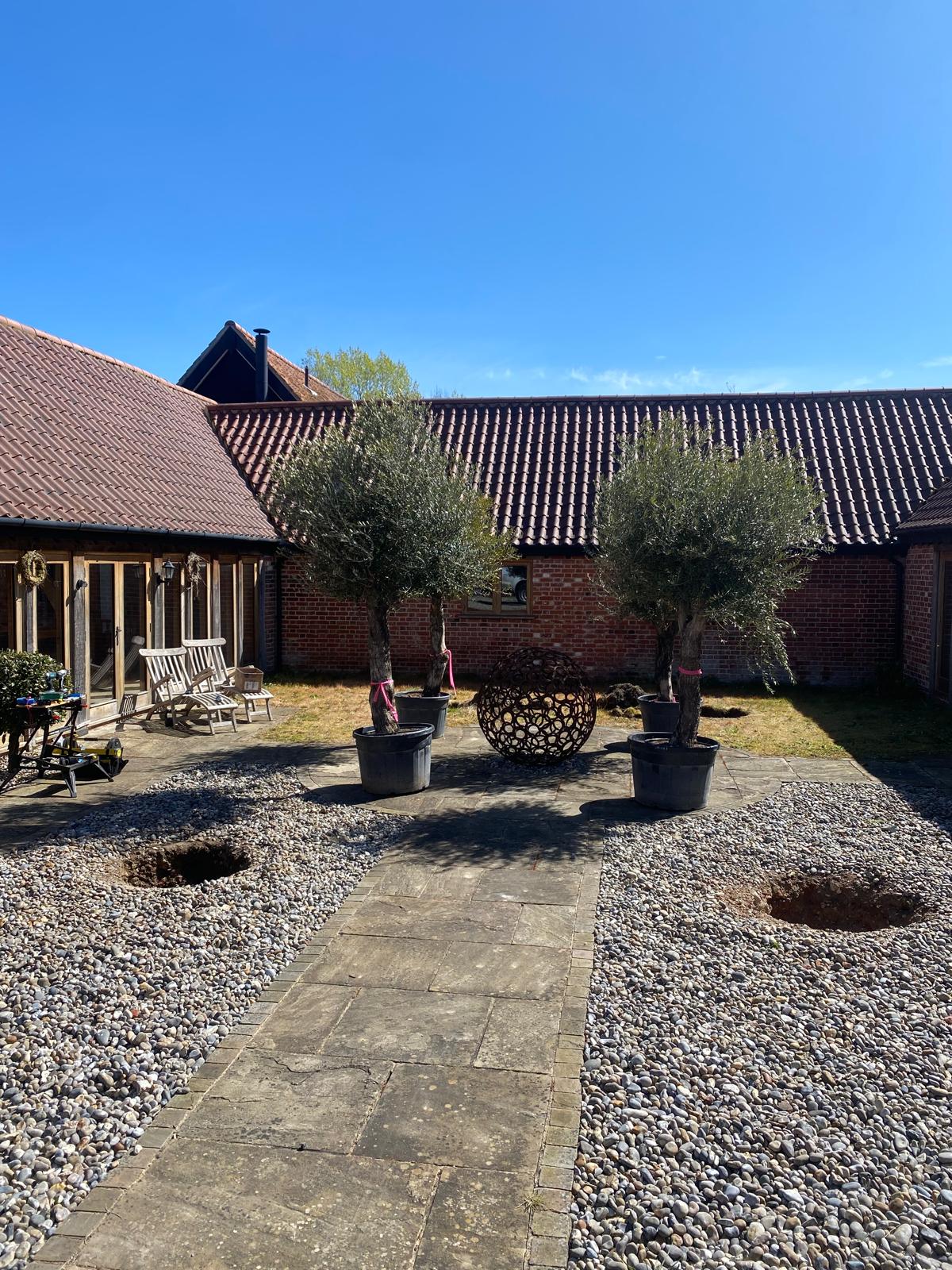
Evergreen silhouettes bringing structure, interest and hope through the winter months.
This is what screening trees offer — and winter is the season to choose them.
Explore Our Range of Screening Olives & Hardy Palms
If you’re feeling inspired, browse our selection of hardy, UK-acclimatised trees:
- Tall Ancient Olive Trees
- Multi-Stem Olives
- Tall Cone-Shaped Specimens
- Hardy Trachycarpus Palms
Every tree is carefully sourced, expertly tended, and delivered with care.
Let’s transform your garden into a space that feels private, peaceful and beautiful — whatever the weather.