If you’ve stepped outside recently, you’ll know that the UK is deep in its familiar wet winter rhythm. The soil is already saturated, containers are damp for days at a time, and the garden feels still, quiet and resting. If you’re wondering whether your olive tree needs watering in winter, the reassuring answer is simple:
There is absolutely no need to water your olive tree again until March.
The winter rain is doing all the work for you — and in fact, watering now can cause far more harm than good.
In this blog, we’ll explain exactly why, based on how olive trees behave in winter, why the rain is providing the perfect level of moisture, and what simple checks you can do to keep your olive tree healthy, strong and ready for the spring growing season.
🌿
Olive Trees in Winter: Dormant, Resting & Remarkably Resilient
Olive trees are famously tough, but they’re also highly seasonal. During the colder months, an olive tree goes into a state of semi-dormancy — it slows down, conserves energy and focuses on root health rather than top growth. Because of this:
- The root system is largely inactive through winter
- Water uptake is significantly reduced
- Soaking the soil can cause roots to sit in cold, wet conditions they cannot process
That means that adding extra water now isn’t helpful — it’s stressful. And when roots are forced to sit in cold, stagnant moisture, they become vulnerable to root rot, fungal pathogens and oxygen deprivation.
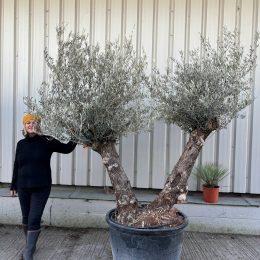
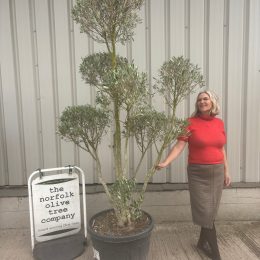
Meanwhile, winter olive trees offer something special. While many deciduous garden trees stand bare and skeletal, the olive tree remains quietly evergreen, silver-toned and full of promise — a small reminder that spring will return.
🌦️
Why Winter Rainfall Is Perfect for Olive Trees
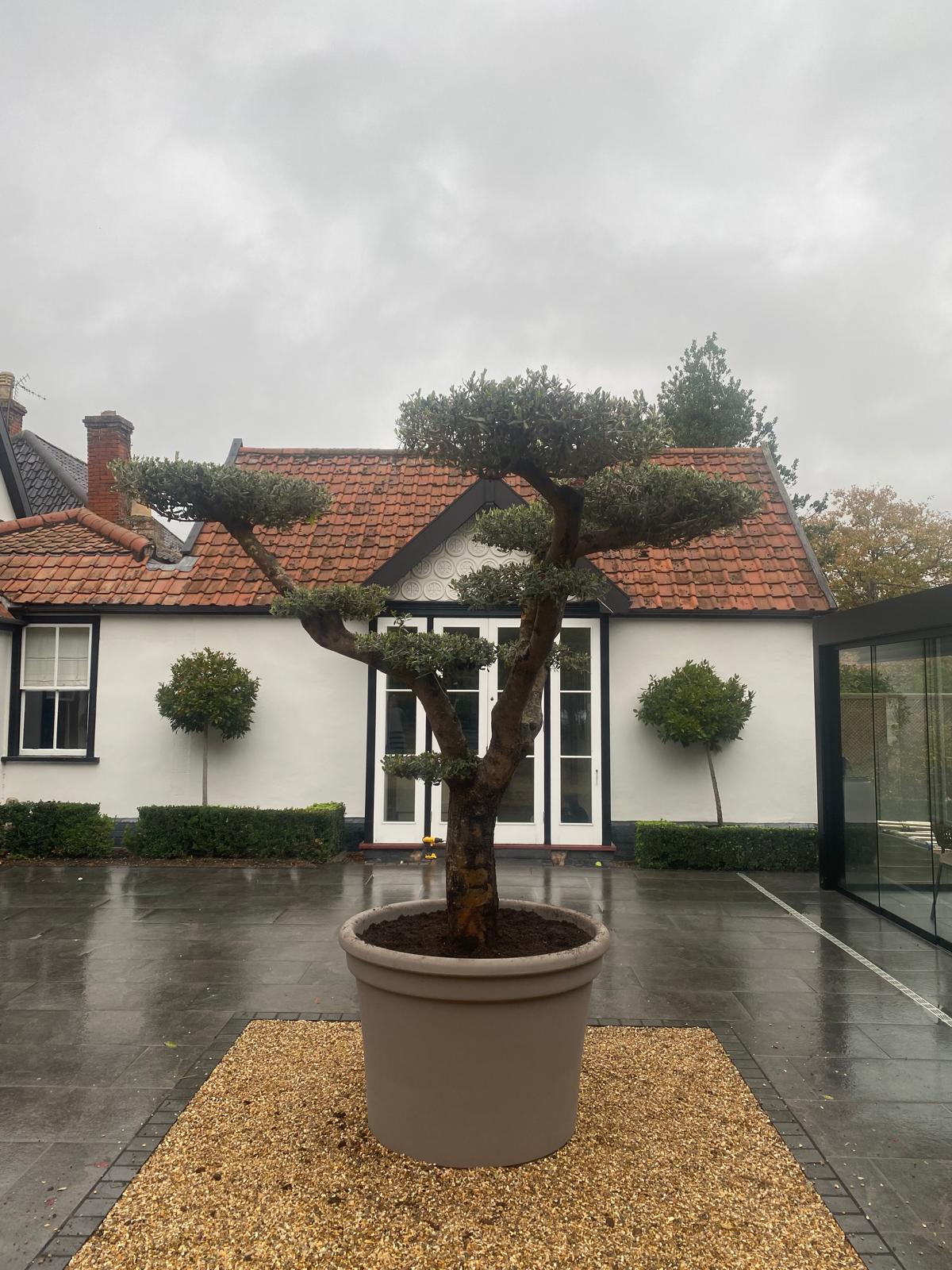
The beauty of keeping olive trees outdoors in the UK is that our winter climate does the hydration for you, especially if your tree is in free-draining soil or a well-prepared container.
Natural rainfall provides:
- Gentle, consistent moisture
- Even soil hydration
- No risk of sudden over-soaking from overenthusiastic watering
However, this only works if drainage is correct. Olive trees do not like sitting in sodden soil — they dislike “wet feet.”
✔️ Quick Drainage Health Check
Ask yourself:
- Is the soil or compost free-draining with added grit?
- Is my container elevated on pot feet?
- Is my pot not sitting in a saucer or decorative pot that holds water?
- Is water able to escape below the root ball?
If all four are true, your tree is perfectly set for winter — and requires no additional watering at all.
🚫
The Real Winter Risk: Overwatering, Not Underwatering
Most new olive tree owners worry that the soil will dry out in winter and the tree will suffer. In reality, winter drought is extremely rare in the UK, especially between November and March.
The real threat during the colder months is overwatering, which can lead to:
- Root rot
- Fungal infections
- Weakened root systems
- Waterlogged soil lacking air pockets
- Die-back in spring
Overwatering is also strongly linked to fungal leaf spotting, including Peacock Spot, particularly when moisture sits on leaves for extended periods. (See our dedicated Peacock Spot guide for help diagnosing and treating this.)
So, while it may feel like watering is a caring act, restraint is actually the best care practice in winter.
Expert care tips for Olive tree care in the UK
Q1: Do I need to water my olive tree in winter in the UK?
No — if your olive tree is outside and receiving rainfall, you should not water it again until March.
Q2: What is the biggest winter care mistake with olive trees?
Overwatering. Saturated winter soil can lead to root rot and fungal diseases.
Q3: Should I protect my olive tree from rain?
No — rain is perfectly fine, provided drainage is good. The tree should not sit in standing water.
Q4: Can I prune my olive tree in winter?
Only remove dead or damaged branches. Save shaping or structural pruning for late spring to early summer.
Q5: How do I know if my pot has good drainage?
The pot must have open drainage holes and should be raised on pot feet so water can escape freely.