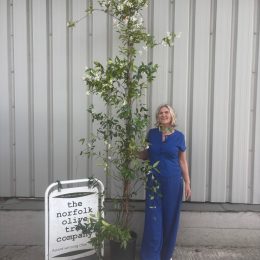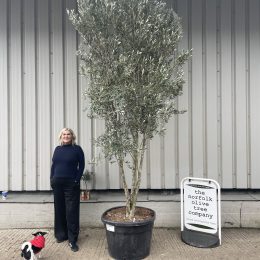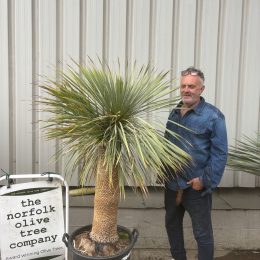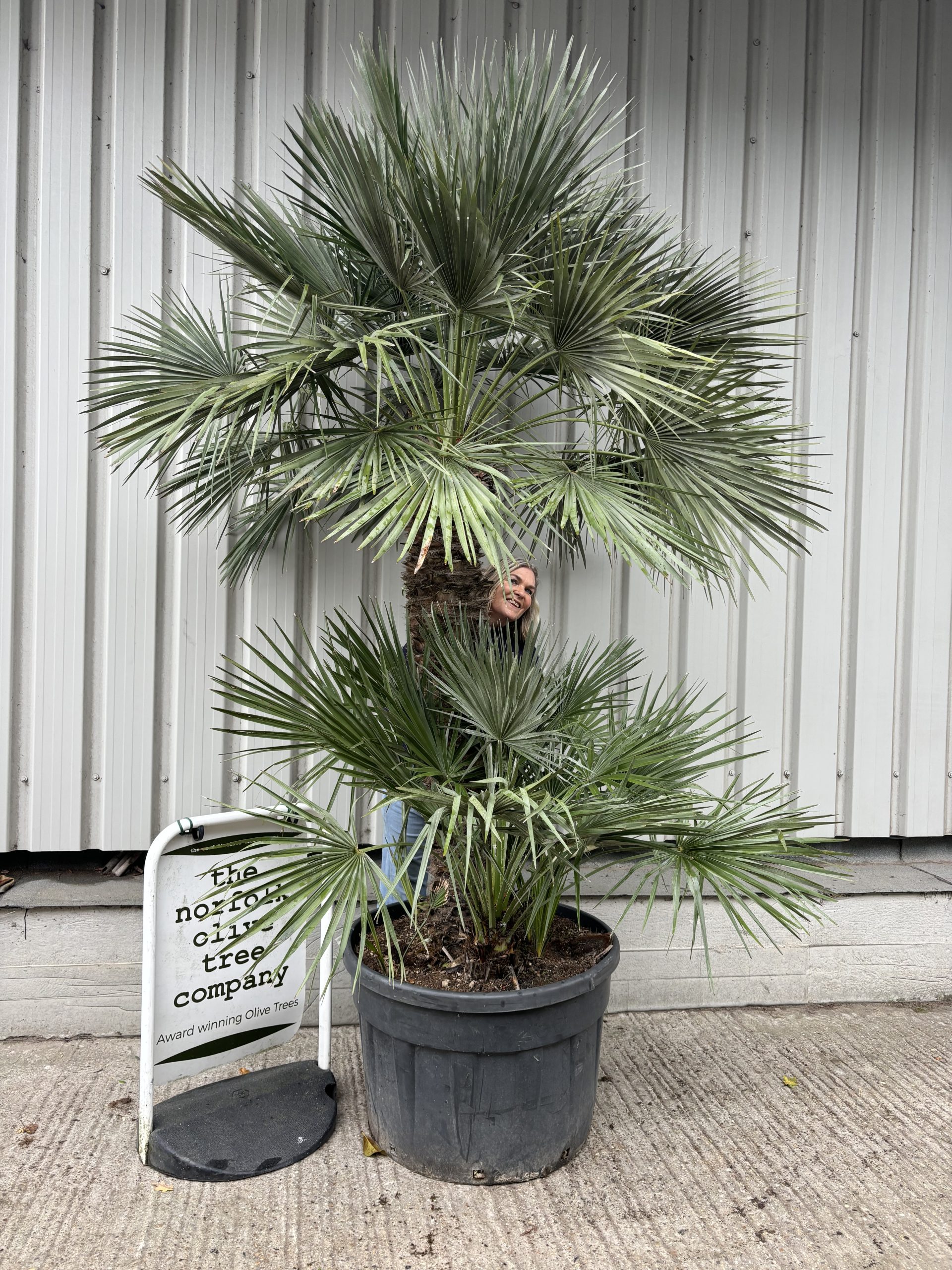
If you love the idea of palm trees but worry that the Norfolk climate is too cold, you’ll be delighted to know that several palm species grow beautifully across Norfolk and the East of England. Thanks to their impressive cold tolerance, evergreen structure and sculptural beauty, hardy palms can transform coastal gardens, courtyards and sheltered urban plots into year-round tropical retreats.
Read more: Hardy Palms for Norfolk & the East of England: A guide.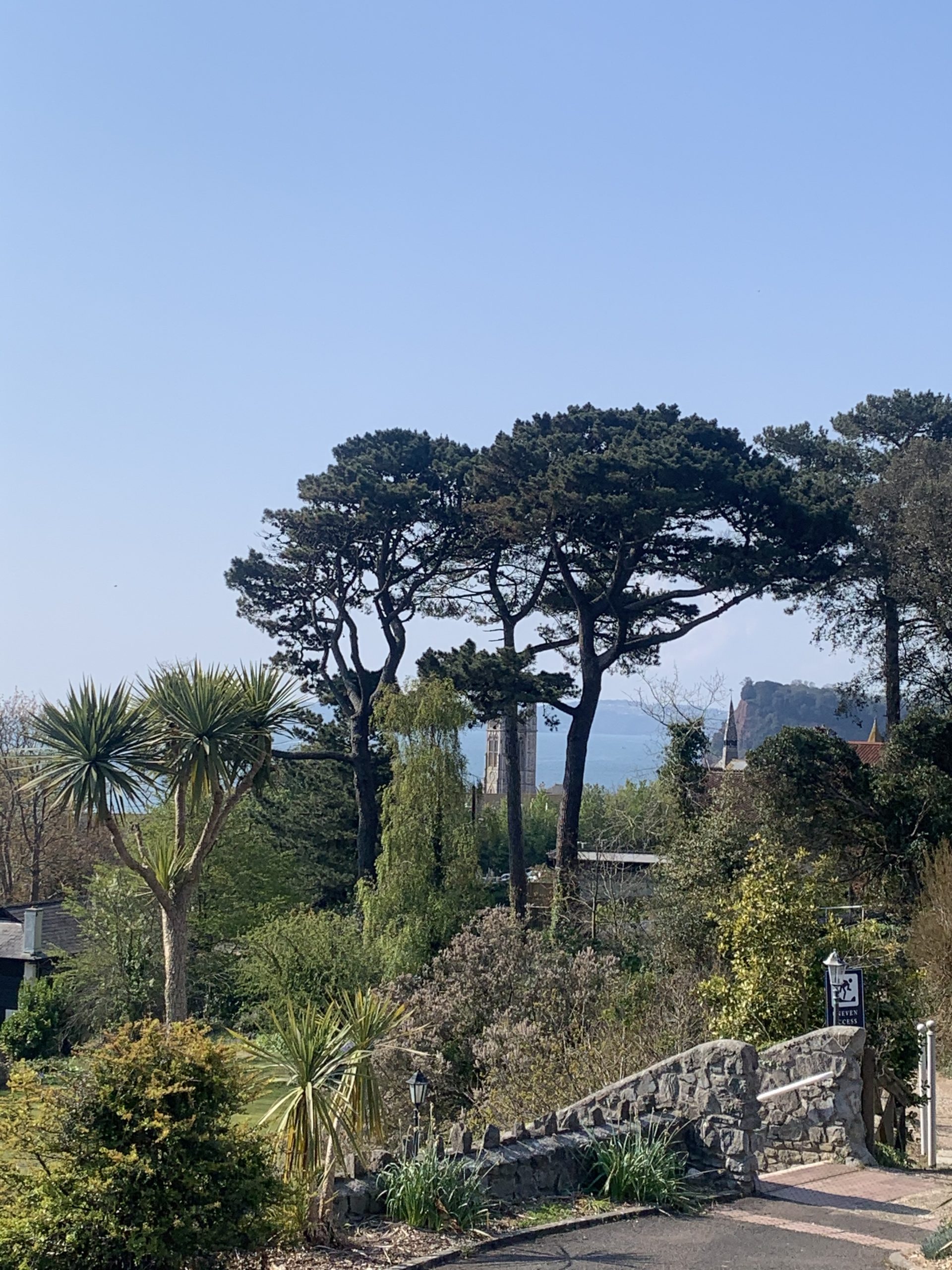
At The Norfolk Olive Tree Company, we specialise in hardy Mediterranean and desert plants that thrive in the East of England—so here is your complete guide to five of the toughest and most striking palms available today:
- Trachycarpus fortunei (Chusan Palm / Windmill Palm)
- Chamaerops humilis (Dwarf Fan Palm)
- Brahea armata (Mexican Blue Palm)
- Brahea edulis (Guadalupe Palm)
- Jubaea chilensis (Chilean Wine Palm)
Each of these evergreen palms brings a different architectural quality to UK gardens, and all are well-suited to the mild, dry, breezy conditions we see across Norfolk’s coastline and East Anglian microclimates.
Trachycarpus fortunei – The Hardiest Palm for the UK
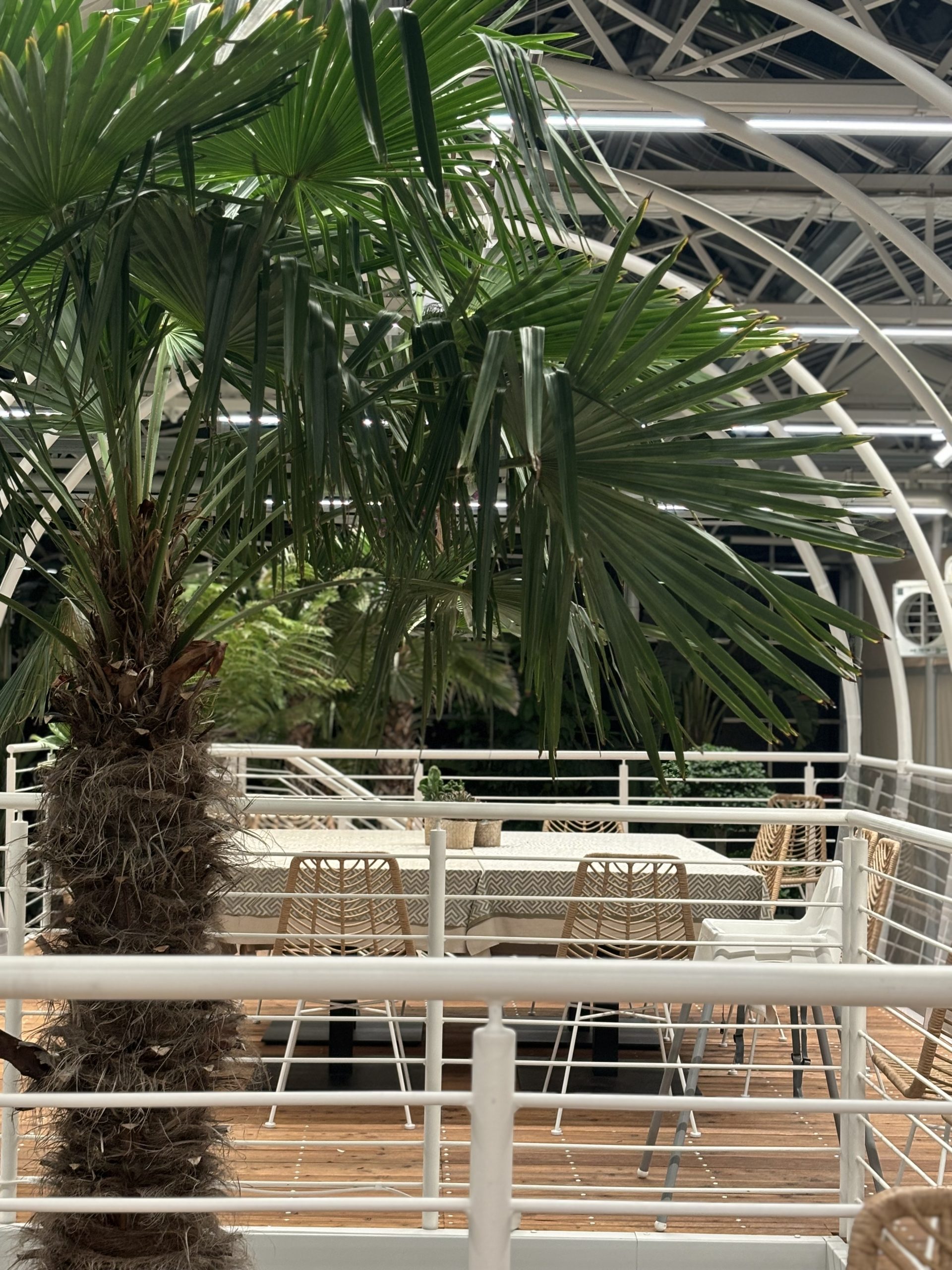
Often called the Windmill Palm, Trachycarpus fortunei is widely considered the hardiest palm in the world, tolerating temperatures down to –15°C. This makes it the perfect evergreen statement tree for gardens across Norfolk and Suffolk, where winters can be cold but rarely extreme.
Why it thrives in the East of England
Its thick, hairy trunk and fan-shaped leaves cope brilliantly with wind exposure, making it ideal for coastal spots such as Hunstanton, Sheringham and Southwold. It grows steadily, reaching 4–8 metres over time, and needs very little maintenance.
Chamaerops humilis – Compact, Architectural & Multi-Stemmed
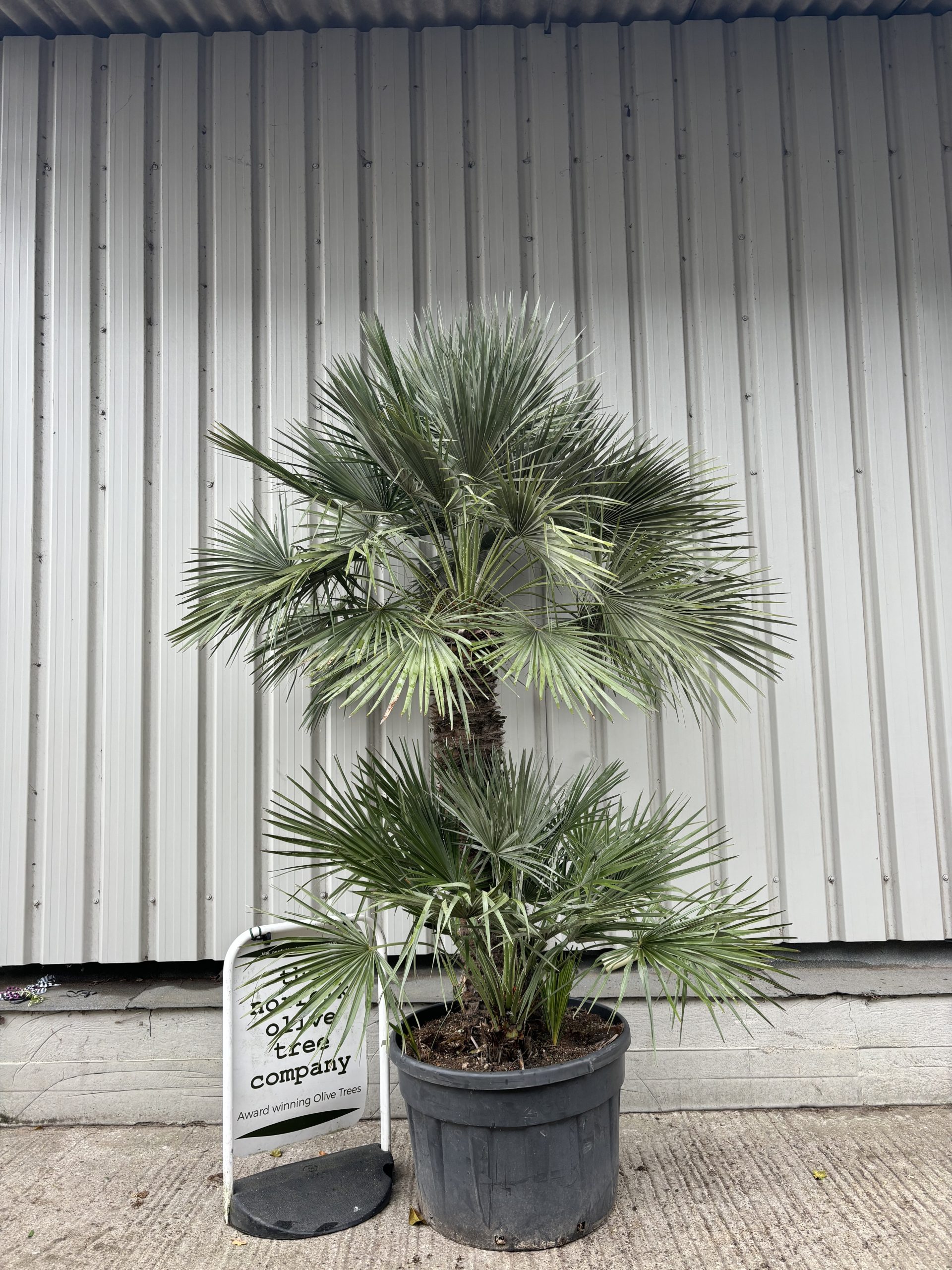
Chamaerops humilis, the Mediterranean Dwarf Fan Palm, is the only palm native to Europe. With its clumping, multi-stem habit, it creates a lush, textural display that suits both contemporary gardens and wild, naturalistic planting.
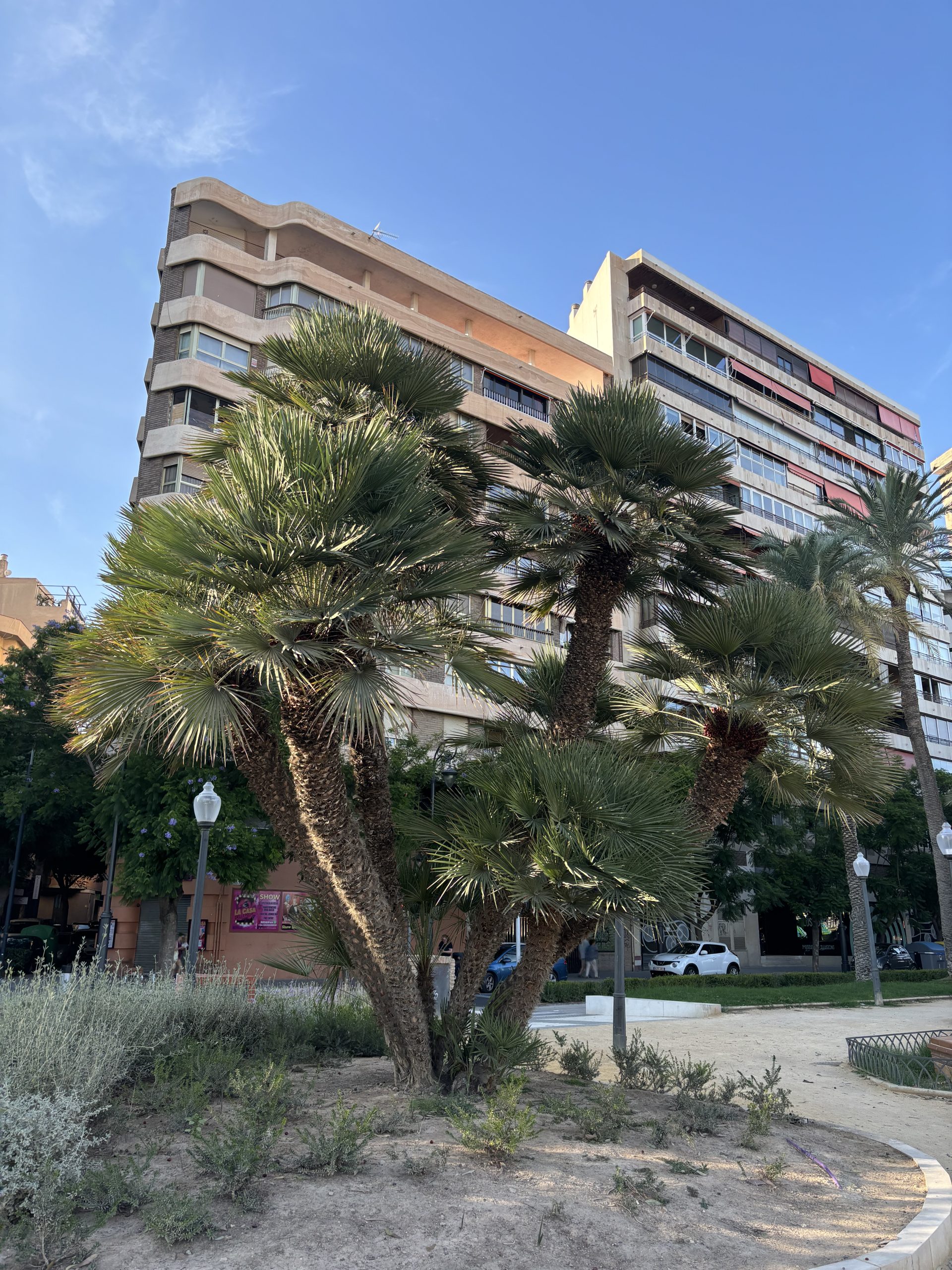
UK Hardiness: around –10°C, making it perfectly viable in sheltered positions in the East of England.
It’s fantastic for smaller gardens, gravel gardens, or planted in large pots on terraces and patios. Because it stays compact and naturally bushy, it pairs beautifully with olives, cork oaks and other Mediterranean staples.
Brahea armata – The Striking Blue Mexican Palm
If you want something truly sculptural and unusual, Brahea armata (the Mexican Blue Palm) delivers unforgettable colour. Its silver-blue, almost icy fan leaves create extraordinary contrast in the garden.
UK Hardiness: typically –7°C to –10°C in sheltered, well-drained positions.
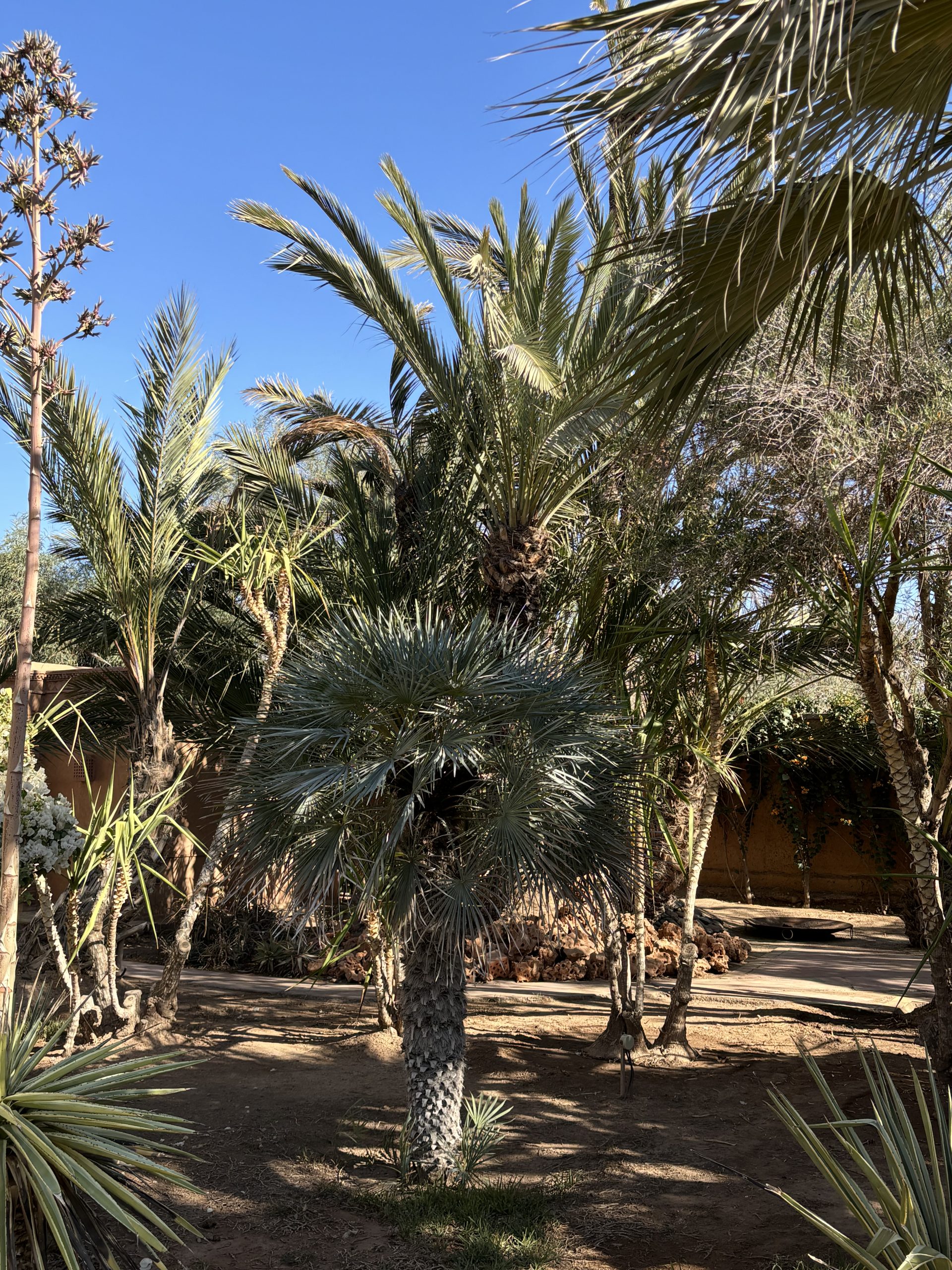
This palm loves the drier conditions seen in parts of Norfolk and Suffolk and excels in south-facing gardens, urban courtyards and coastal microclimates with reflected heat. Given space and sun, it becomes one of the most breathtaking palms you can grow in the UK.
Brahea edulis – A Rare & Beautiful Evergreen Palm
Brahea edulis, the Guadalupe Palm, is lesser-known but highly rewarding. With deep green, neatly rounded fronds and a clean, straight trunk, it offers a more classical palm silhouette than Brahea armata, but with similar strength and elegance.
UK Hardiness: around –8°C, thriving in mild coastal and sheltered East Anglian gardens.
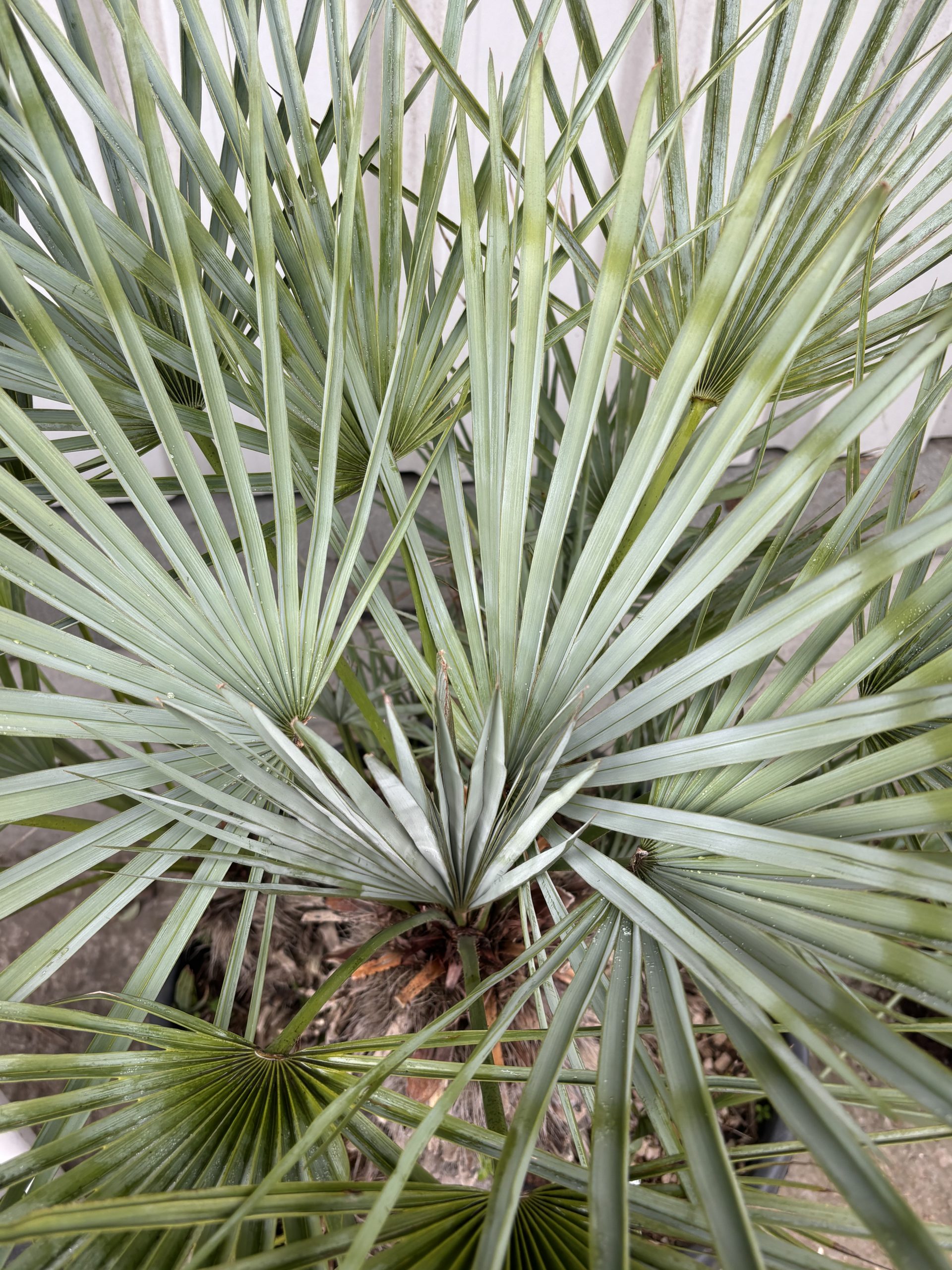
It’s slow-growing, long-lived, and provides exceptional structure through every season.
Jubaea chilensis – The Majestic Chilean Wine Palm
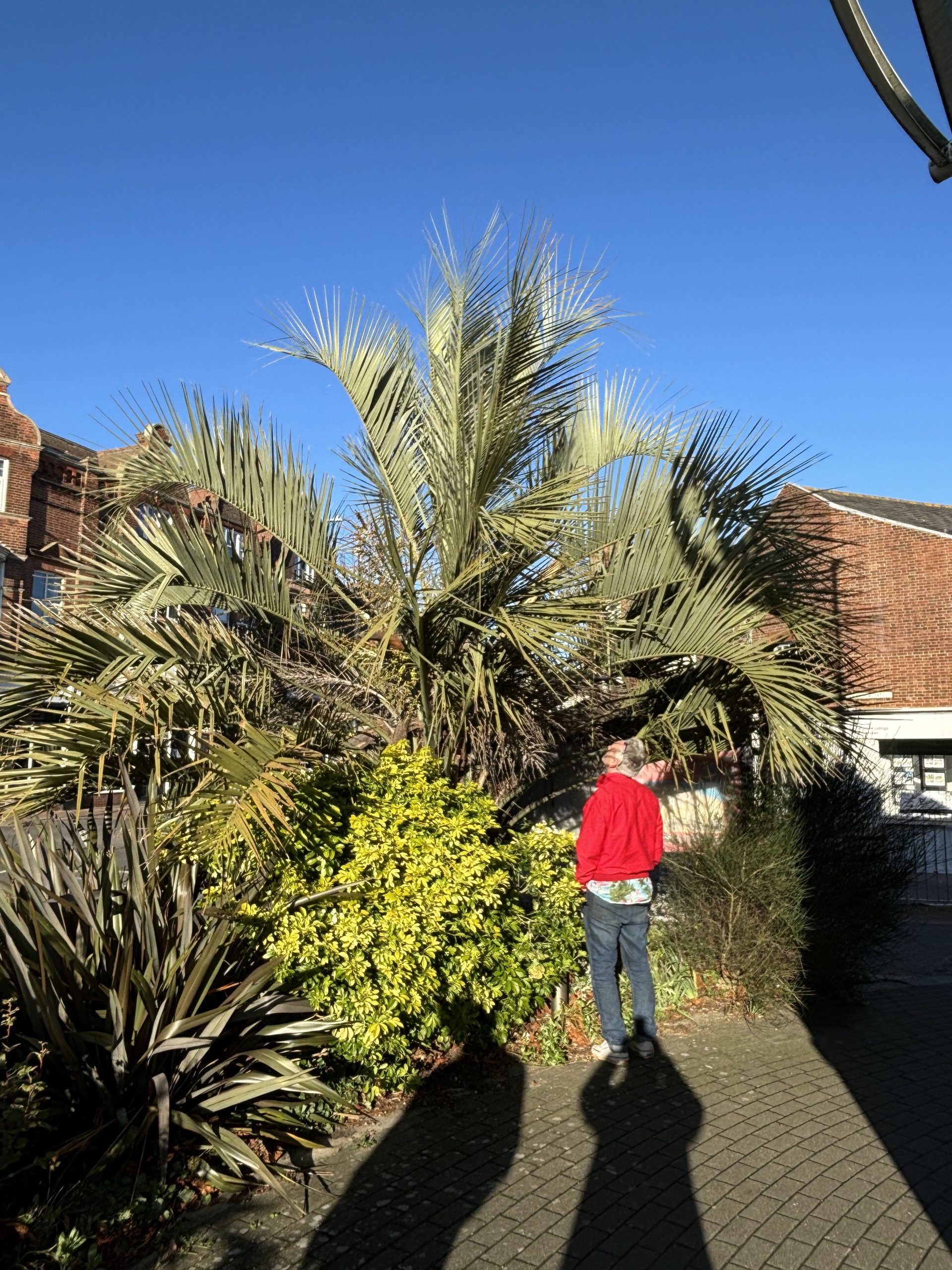
One of the most impressive palms you can grow, Jubaea chilensis (the Chilean Wine Palm) is admired for its incredibly robust trunk, slow growth and remarkable cold tolerance.
UK Hardiness: to around –12°C, outperforming many other large palms.
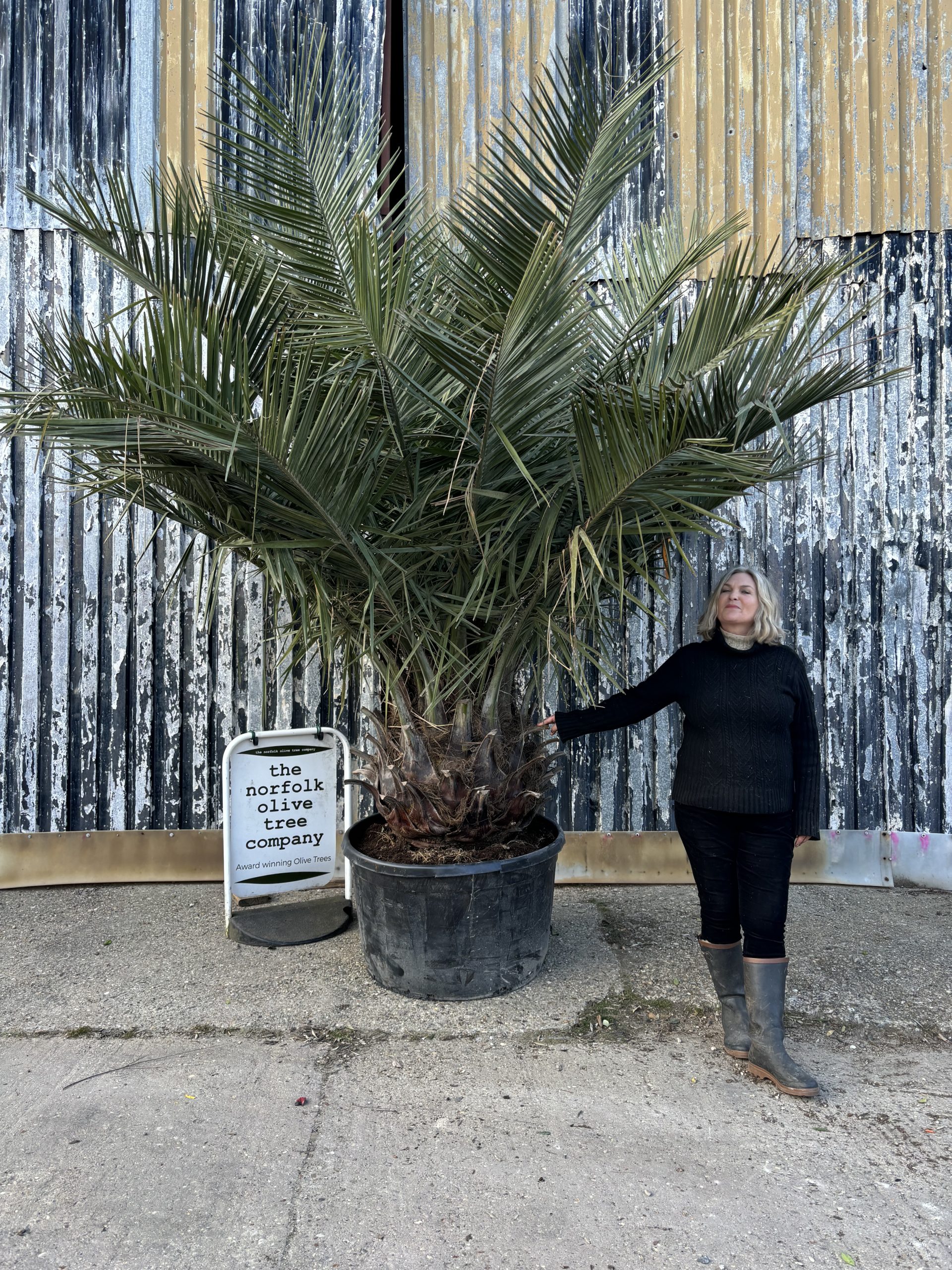
Its thick, elephant-foot trunk and sweeping arching fronds give it a truly prehistoric feel. It grows slowly, making it an investment tree for future generations—ideal for spacious Norfolk gardens where its grandeur can be fully appreciated.
Basic Care for Hardy Palms in Norfolk & the East of England
Growing hardy palms in the UK is far easier than most people expect. Follow these care principles:
Sunlight
All five palms thrive in full sun, though Trachycarpus fortunei also tolerates partial shade.
Soil
- Free-draining soil is essential
- Improve heavy clay with grit, sand and organic matter
- Avoid planting in waterlogged areas
Watering
- Water regularly during the first year
- Once established, most palms are drought tolerant
- Container palms need consistent watering in summer
Winter Protection
- Wrap young palms in fleece during severe frosts
- Protect the crown on very cold nights
- Mulch around the base in late autumn
Feeding
Apply a slow-release palm fertiliser in spring to support strong evergreen growth.
FAQ – Hardy Palms in the UK
Are these palm trees really hardy in the UK?
Yes. Trachycarpus fortunei and Jubaea chilensis are fully hardy across most of the UK, including Norfolk. Chamaerops humilis and the Brahea species thrive in sheltered, sunny East Anglian gardens.
Do hardy palms stay evergreen?
All five species are evergreen year-round, providing structure and colour even in winter.
Can I grow palms near the Norfolk coast?
Absolutely. The coastline’s mild, maritime climate is ideal—wind exposure is usually more damaging than cold, and these species tolerate wind very well.
Which palm is best for pots?
Chamaerops humilis is excellent for containers. Trachycarpus fortunei can also be grown in large pots.
Do palms need pruning?
Minimal pruning—just remove old, brown fronds once they naturally die back.