Butia capitata (Jelly Palm): A Complete UK Growing Guide
Few palms combine elegance, resilience and character quite like the Jelly Palm. With its graceful arching blue-green fronds, stout trunk and impressive cold tolerance, Butia capitata has become one of the most sought-after palms for gardeners wanting to create a Mediterranean-inspired garden that can thrive in the British climate.
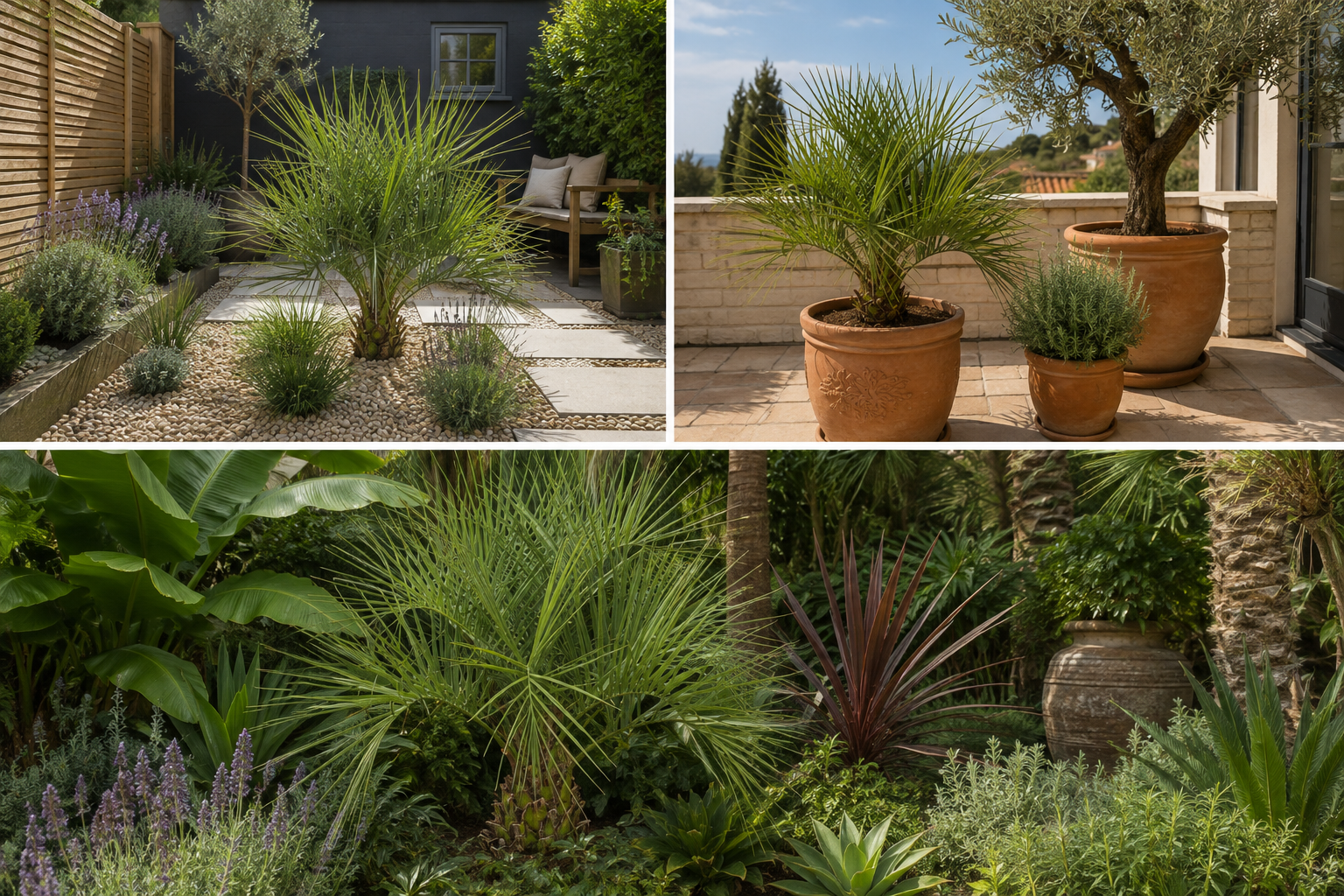
Whether planted as a striking specimen on a sunny terrace or used as the centrepiece of a contemporary planting scheme, the Jelly Palm brings year-round architectural interest and surprisingly copes well with UK winters once established.
If you’re looking for a palm that offers both beauty and durability, the Jelly Palm deserves a place at the top of your list.
⸻
What is Butia capitata?
The Jelly Palm, traditionally known as Butia capitata, is a slow-growing feather palm native to South America. Today, many botanists recognise the commonly cultivated species as Butia odorata, although the name Butia capitata remains widely used by gardeners, nurseries and landscape designers.
It belongs to the Arecaceae family and is prized for its:
- Elegant arching feather leaves
- Attractive blue-grey foliage
- Thick textured trunk
- Excellent cold tolerance
- Long lifespan
- Low maintenance requirements
Unlike faster-growing palms, the Jelly Palm develops slowly, becoming increasingly majestic with age.
⸻
Is Butia capitata hardy in the UK?
One of the reasons the Jelly Palm has become so popular is its impressive hardiness.
A healthy, established specimen can tolerate temperatures around -10°C to -12°C, with short periods slightly lower in favourable conditions. In milder coastal areas and much of southern and eastern England, established plants often come through winter remarkably well.
Success depends on more than temperature alone. Good drainage, plenty of sunshine and avoiding prolonged winter wet around the roots are just as important as protection from severe frost.
Why gardeners love the Jelly Palm
Unlike many ornamental palms, the Jelly Palm has an unmistakable personality.
Its gently arching fronds create movement in the garden while the silvery-blue foliage contrasts beautifully with olive trees, lavender, rosemary and ornamental grasses.
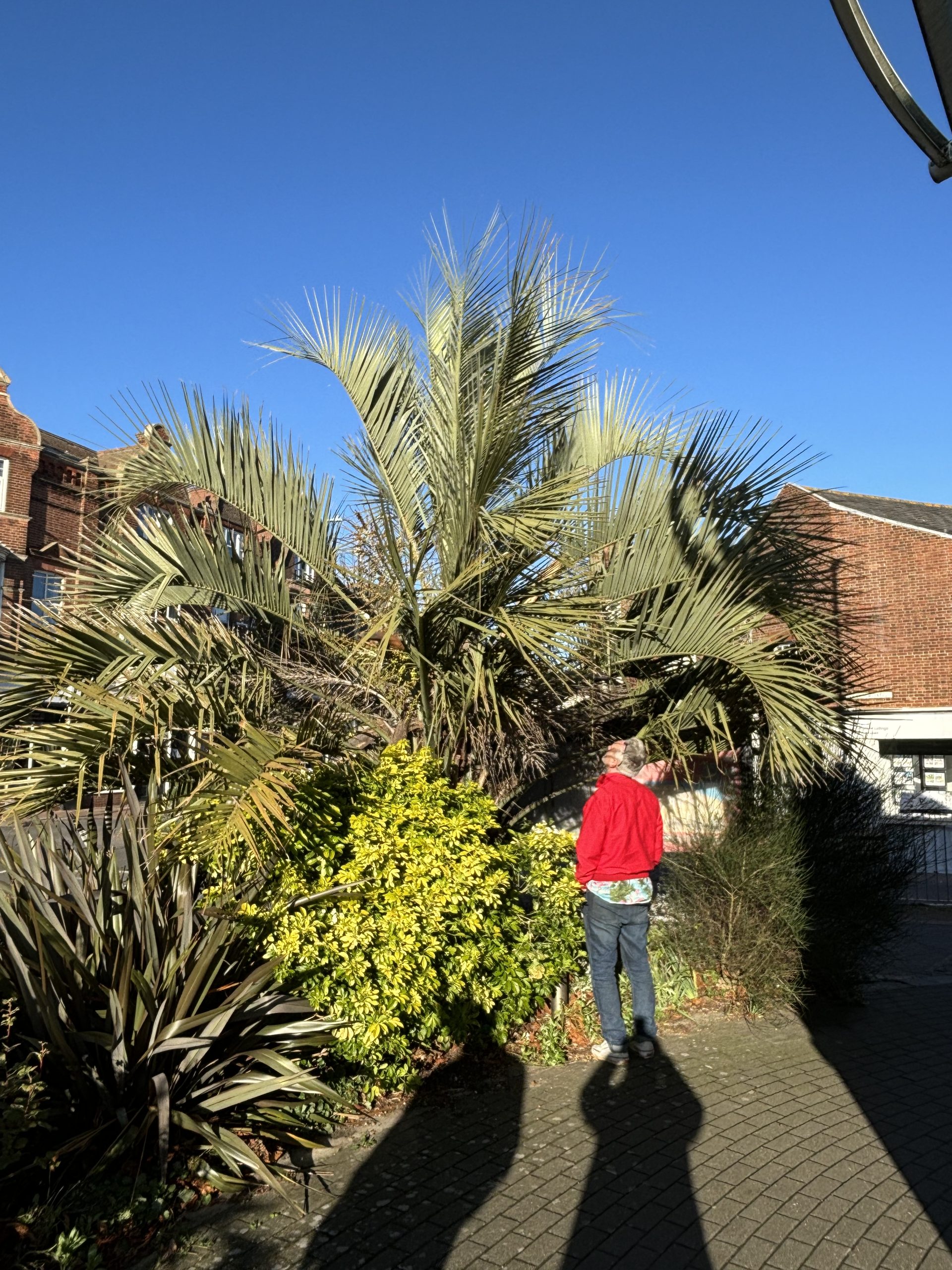
It complements:
- Olive trees
- Agapanthus
- Lavender
- Yucca
- Phormium
- Hardy bananas
- Mediterranean herbs
- Gravel gardens
- Contemporary landscapes
Whether your garden is modern or traditional, the Jelly Palm adds instant maturity and architectural structure.
Where should you plant a Jelly Palm?
Choose the warmest, sunniest part of your garden.
Ideal conditions include:
- South or west-facing position
- Free-draining soil
- Shelter from cold easterly winds
- Plenty of space for the crown to develop
Avoid areas where water sits during winter, as prolonged wet conditions can damage roots more than cold itself.
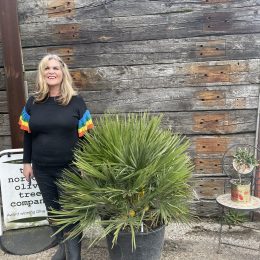
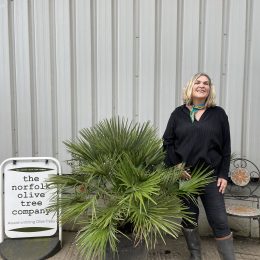
For smaller gardens, the Jelly Palm also performs exceptionally well in large containers, making it an excellent choice for patios and courtyards.
How to care for a Butia capitata
Fortunately, Jelly Palms are relatively low maintenance.
Watering
Water regularly during the first growing season while the roots establish.
Once mature, they become surprisingly drought tolerant, although prolonged dry spells will benefit from occasional deep watering.
Feeding
Apply a balanced slow-release palm fertiliser during spring and early summer to encourage healthy growth and maintain strong green foliage.
Avoid feeding late in the season when new growth may be vulnerable to winter damage.
Pruning
Only remove completely brown fronds.
Healthy green leaves continue to feed the palm and should never be cut simply for appearance.
How fast does a Jelly Palm grow?
Patience is rewarded.
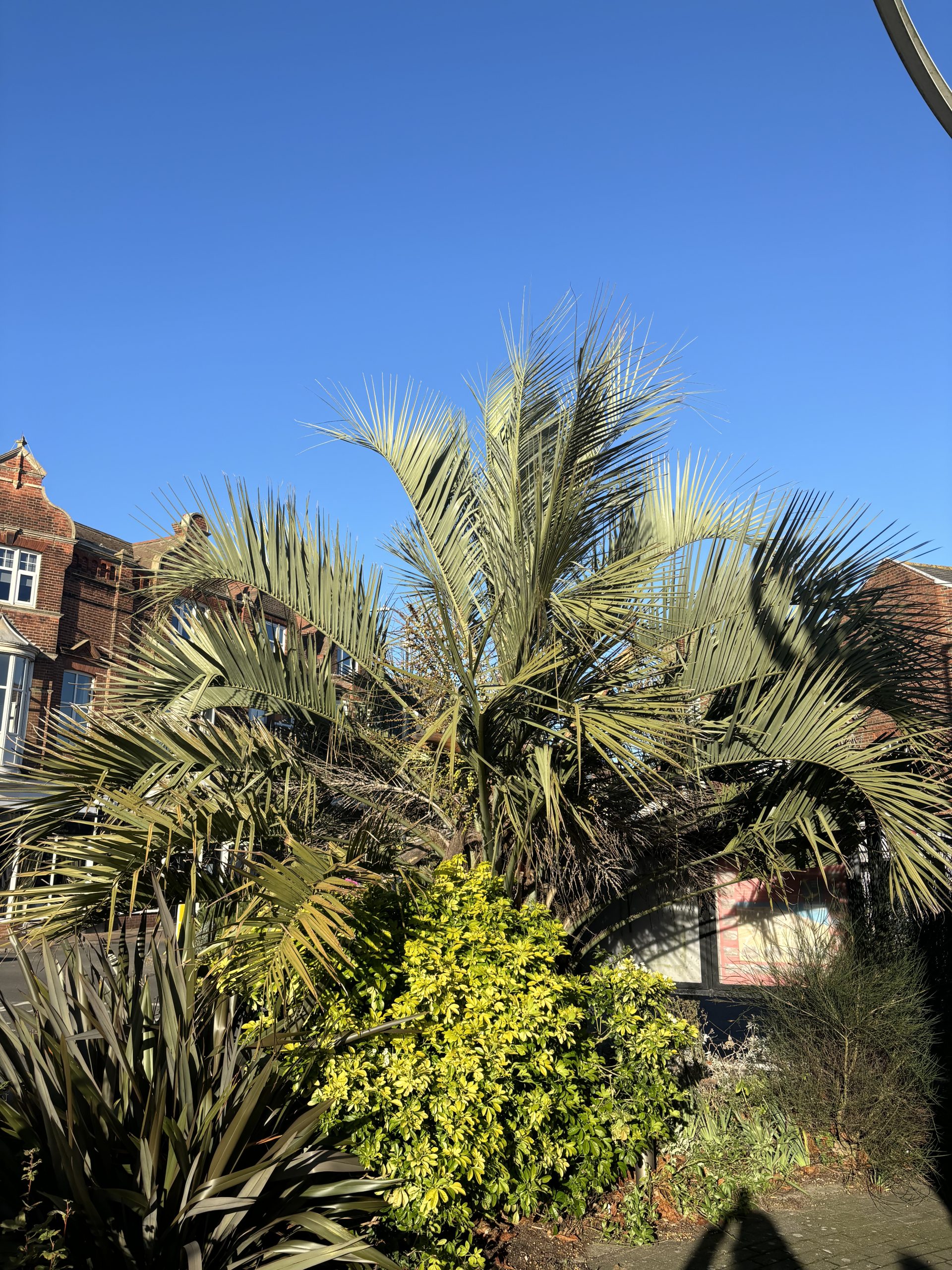
The Jelly Palm is naturally slow growing, often producing just a few new fronds each year in the UK climate.
Although growth is gradual, each season adds to its character, making mature specimens increasingly valuable and visually impressive.
Many gardeners consider them an investment plant that becomes more beautiful every year.
Can Jelly Palms produce fruit?
Yes.
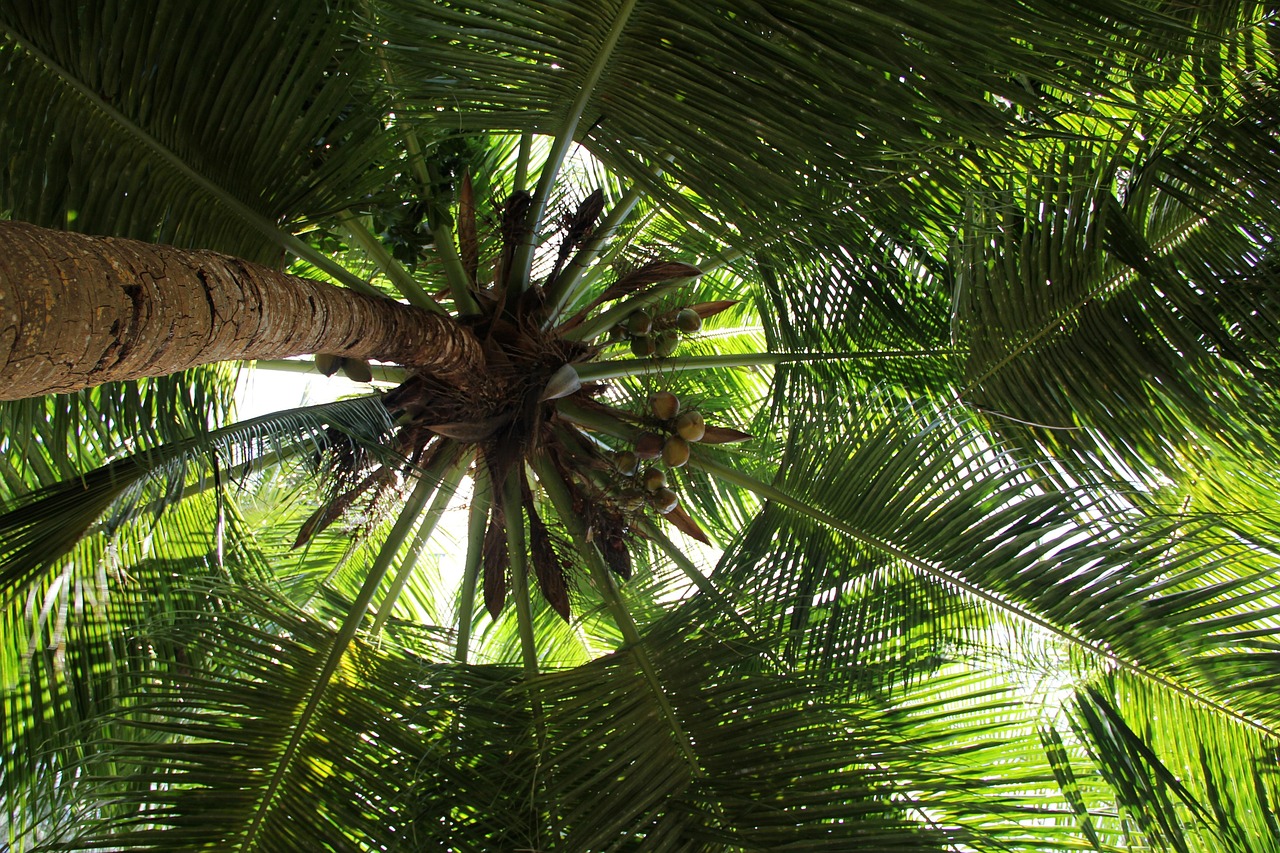
In warmer climates, mature Jelly Palms produce clusters of fragrant yellow-orange fruits, traditionally used to make jams and jellies—hence the common name “Jelly Palm.”
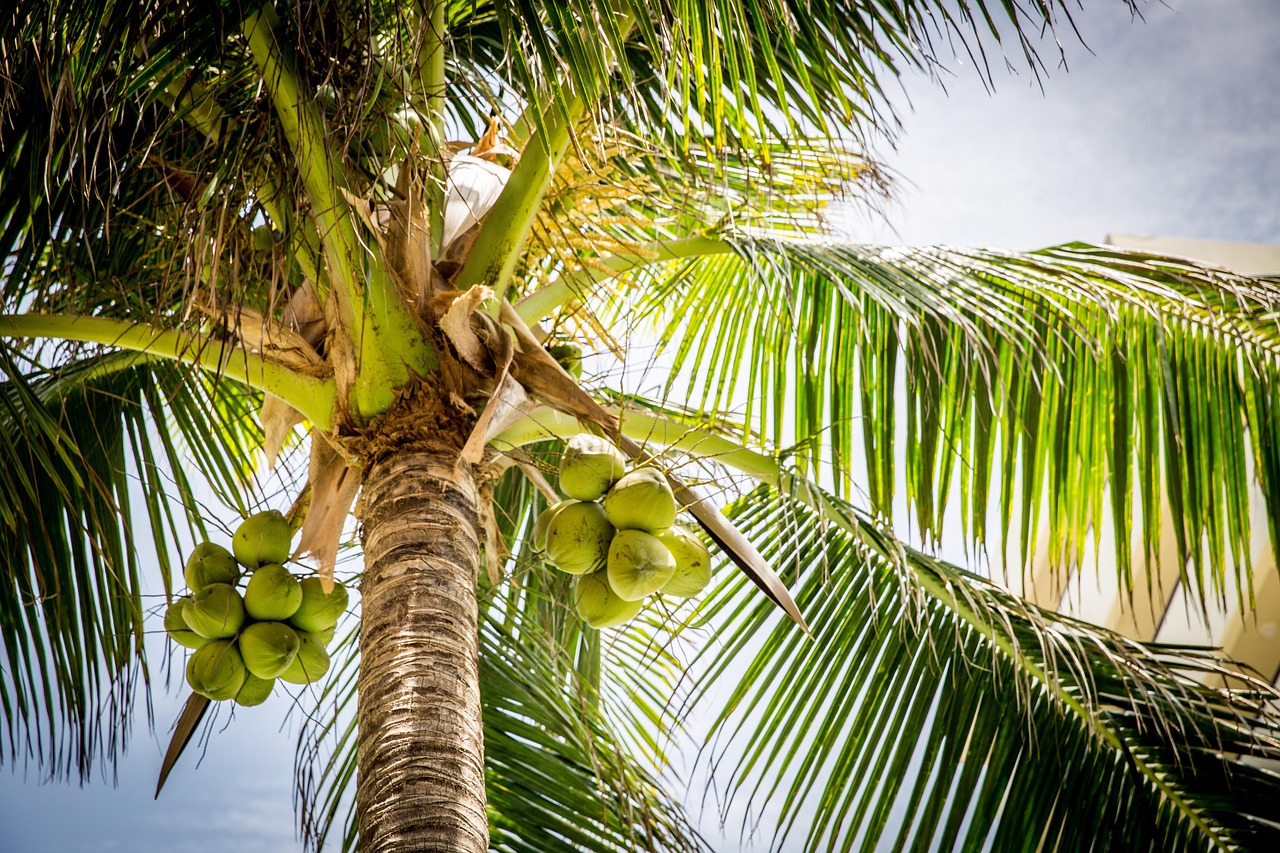
UK-grown specimens may occasionally flower during particularly warm summers, although reliable fruit production is less common due to our cooler climate.
Even without fruit, the spectacular foliage is reason enough to grow one
Why choose a Jelly Palm for a British garden?
As UK summers become warmer and gardeners increasingly embrace drought-tolerant planting, the Jelly Palm has become one of the finest choices for creating a relaxed Mediterranean feel without sacrificing winter resilience.
It offers:
- Year-round interest
- Excellent architectural form
- Attractive blue foliage
- Good cold tolerance
- Low maintenance
- Long lifespan
- Exceptional specimen value
For anyone wanting to create an elegant outdoor space with lasting impact, few palms offer such an impressive combination of beauty and toughness.
Butia capitata (Jelly Palm) Frequently Asked Questions
Is Butia capitata the same as Butia odorata?
Yes. The palm commonly sold as Butia capitata is now widely accepted by botanists as Butia odorata, although both names remain in common use.
Can Jelly Palms survive British winters?
Yes. Established specimens are among the hardiest feather palms suitable for UK gardens when planted in a sunny, free-draining position.
Does a Jelly Palm grow quickly?
No. It is naturally slow growing, making it easy to manage while steadily developing into a magnificent specimen over many years.
Can I grow a Jelly Palm in a pot?
Absolutely. Large containers suit Jelly Palms very well, provided they have excellent drainage and enough space for root development.
Is Butia capitata suitable for coastal gardens?
Yes. Jelly Palms cope well in many coastal locations, where milder winters often encourage stronger growth.
⸻
Discover Beautiful Hardy Jelly Palms at The Norfolk Olive Tree Company
Whether you’re designing a contemporary courtyard, creating a Mediterranean-inspired garden or looking for a statement specimen that offers year-round interest, a Jelly Palm is an investment that will reward you for decades.
At The Norfolk Olive Tree Company, we carefully select healthy, high-quality palms chosen for their form, character and suitability for British gardens. Whether you’re planting a single specimen or creating an entire Mediterranean planting scheme with olive trees, figs and architectural plants, we’re always happy to help you choose the right palm for your space.
Browse our collection of Jelly Palms today and bring timeless Mediterranean elegance to your garden.