Large Multi-Stemmed Chamaerops Humilis Palms: Architectural Mediterranean Style for UK Gardens
A large Chamaerops humilis, commonly known as the European fan palm or Mediterranean fan palm, can bring an immediate sense of structure, maturity and Mediterranean character to a garden. With its distinctive fan-shaped leaves and naturally multi-stemmed growth, it is one of the most recognisable architectural palms suitable for UK gardens.
At The Norfolk Olive Tree Company, we particularly appreciate the individual character of mature Chamaerops humilis. No two multi-stemmed specimens are quite alike. The number of stems, their height and arrangement, and the shape of the crown all contribute to the appearance of the finished plant.
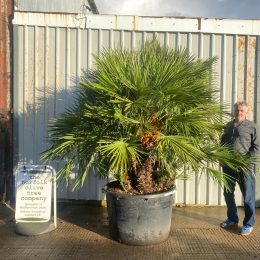
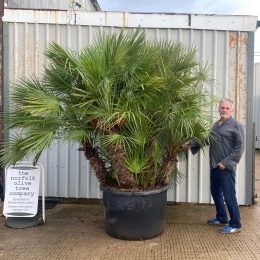
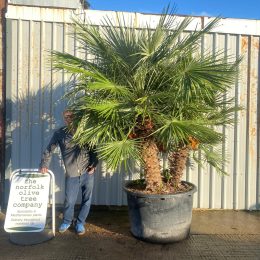
We currently have some impressive large specimens, including a four-stemmed palm and two substantial seven and eight-stemmed examples, each selected for its distinctive natural form.
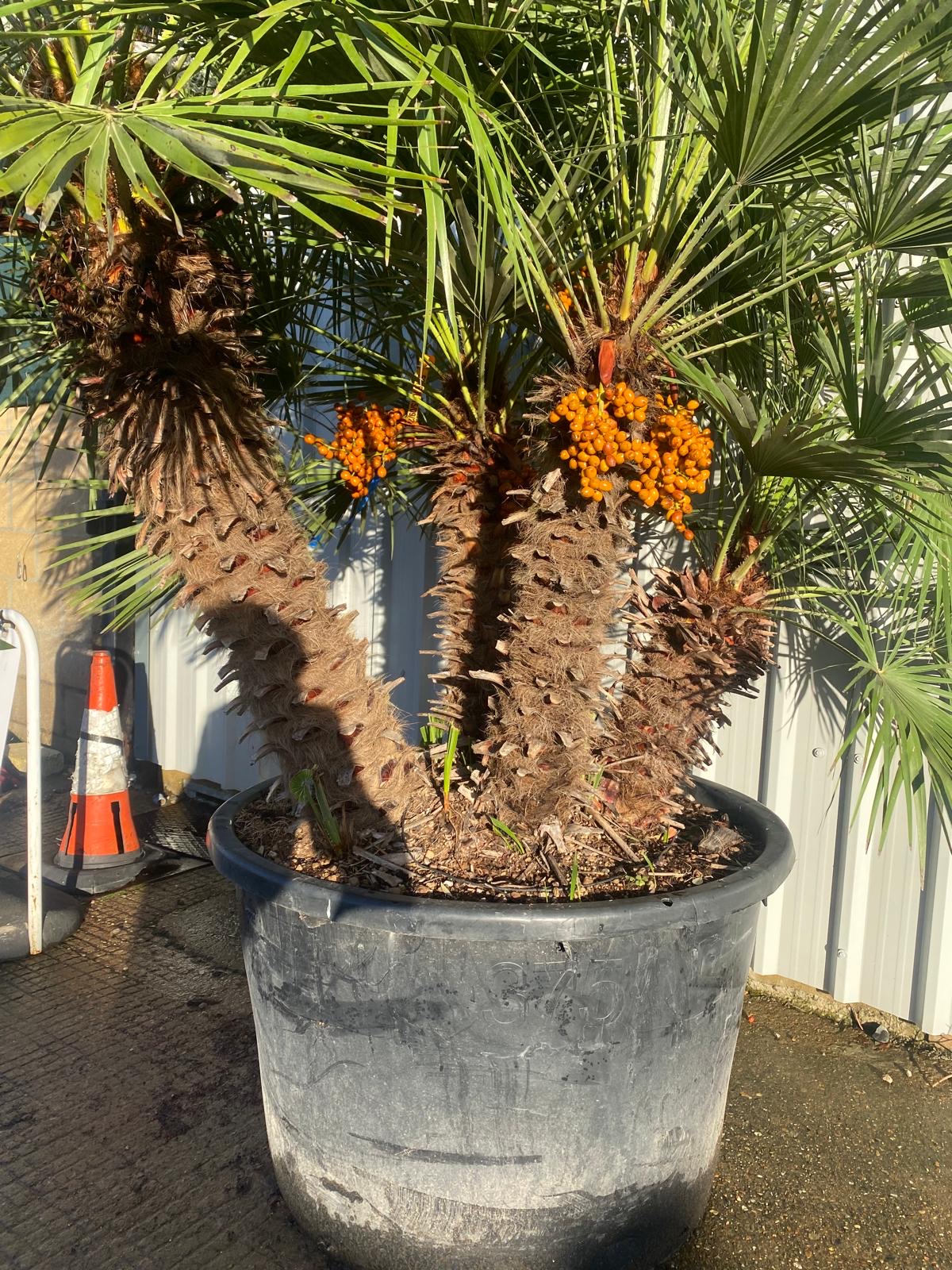
For anyone looking to introduce a substantial Mediterranean palm into their garden, these are plants that offer considerably more than simple height.
What makes Chamaerops humilis such a distinctive palm?
Chamaerops humilis is native to the western and central Mediterranean, where it grows in a variety of landscapes, including rocky hillsides and coastal locations. It is commonly known as the European fan palm and is one of the few palm species native to Europe.
Its most distinctive characteristic is its naturally clumping growth habit. Rather than developing a single dominant trunk, Chamaerops humilis produces several stems from its base, each carrying a crown of rounded, fan-shaped leaves.
As the plant matures, these stems develop into an architectural cluster, creating a full, sculptural appearance.
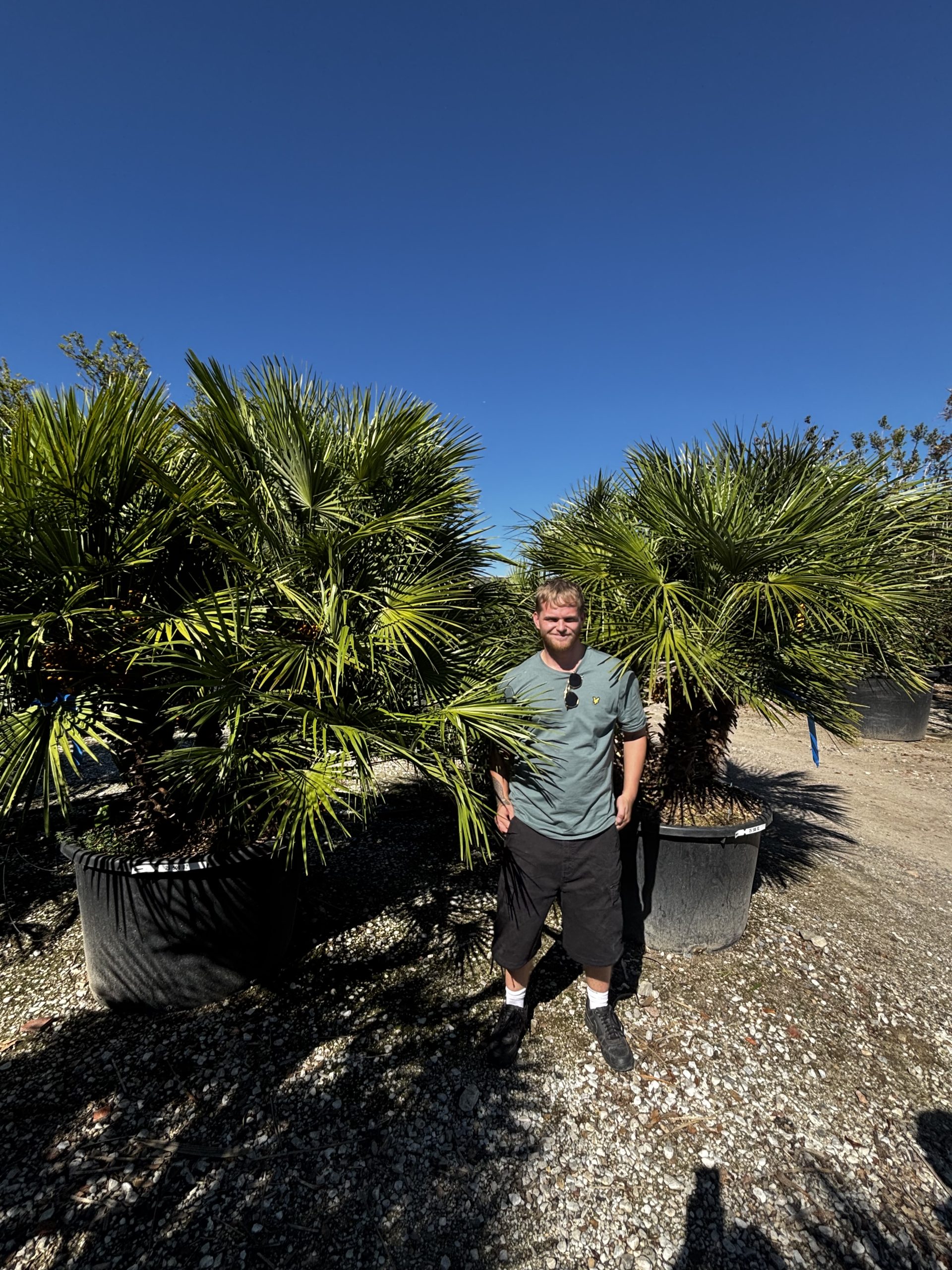
The foliage is evergreen, providing year-round interest and structure. Its strong outline works particularly well in gardens where architectural planting, contrasting textures and Mediterranean character are important design features.
Unlike some palms grown primarily for their height, Chamaerops humilis has an attractive, substantial presence through its combination of stems and foliage.
Why choose a large, established European fan palm?
There is a considerable difference between introducing a young palm and planting a mature, multi-stemmed specimen.
A younger Chamaerops humilis has the potential to develop into an impressive plant over time. A large established specimen, however, already has the height, stem development and natural proportions that can take years to achieve.
This makes mature fan palms particularly appealing for:
- Creating an immediate architectural focal point.
- Adding evergreen structure to a Mediterranean garden.
- Framing an entrance, courtyard or terrace.
- Introducing height and contrasting foliage into contemporary landscaping.
- Providing an established feature in a newly designed garden.
The number of stems is one consideration, but it is not the only one. The arrangement and height of the individual stems, the spread of the foliage and the overall balance of the plant all contribute to its character.
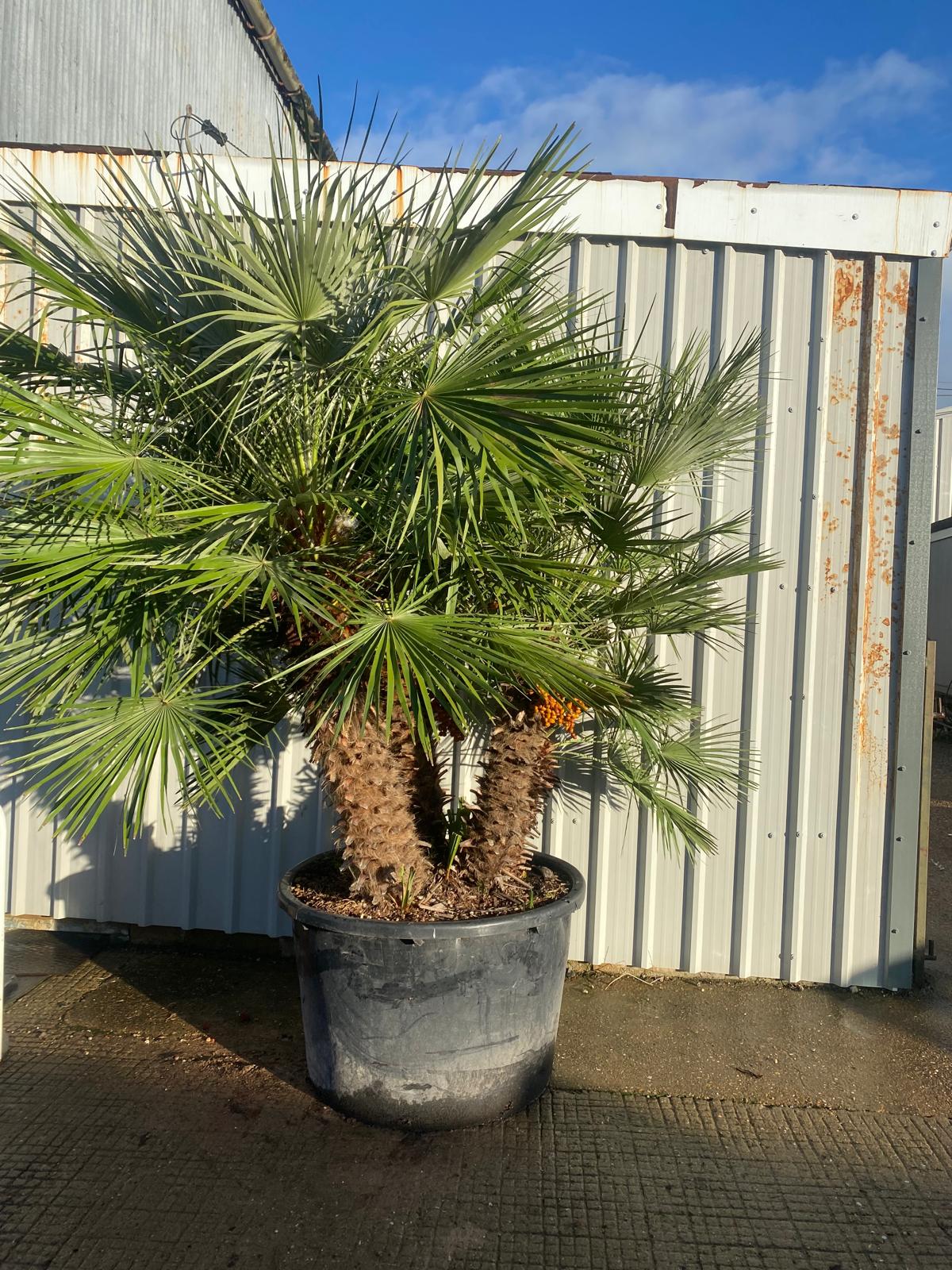
This is why we believe it is important to look at each individual specimen rather than simply buying a palm based on its stated height.
Our selected large Chamaerops humilis specimens
We have selected several substantial European fan palms, each with its own natural form and proportions.
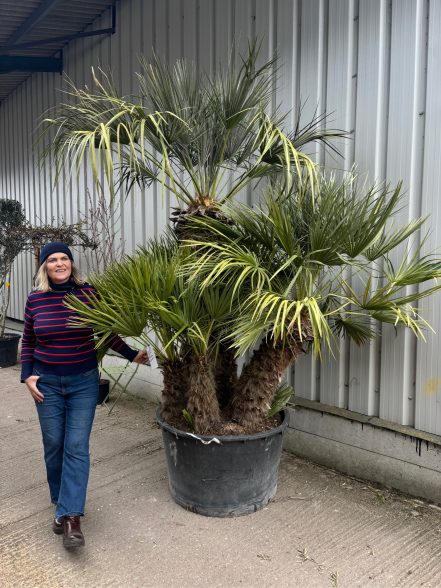
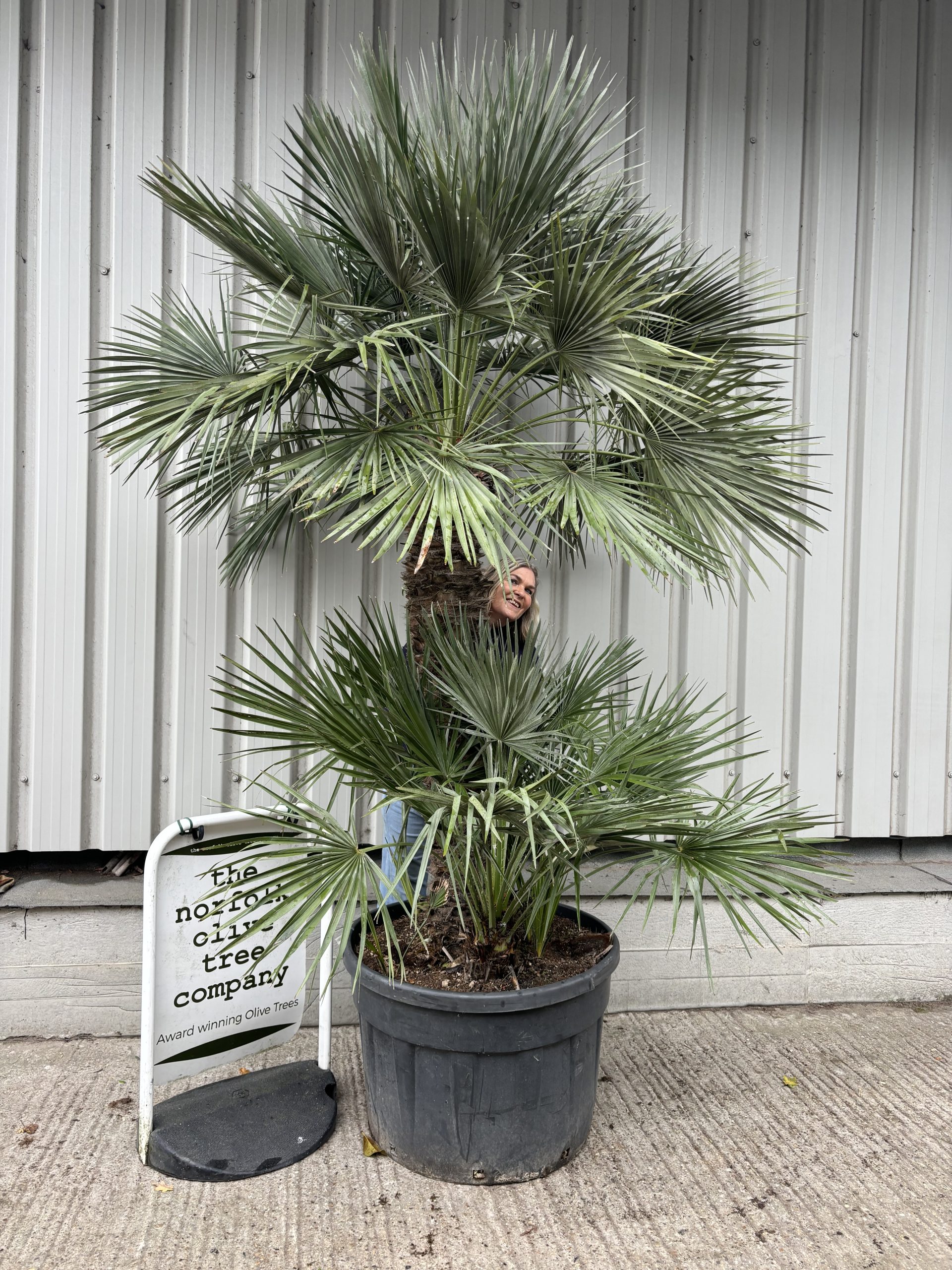
Four-stemmed Chamaerops humilis –
Our four-stemmed specimen has a particularly interesting arrangement of stems, with different heights creating a varied natural outline.
Measurements:
- Overall height including pot: 2.65
- Height excluding pot: 2.10 metres
- Number of stems: 4
- Tallest stem: 1.20 metres
- Second stem: 1 metre
- Third stem: 90cm
- Fourth stem: 80cm
- Pot dimensions: 80cm wide × 55cm deep
The variation in stem height gives this palm an individual character, with four distinct crowns contributing to its overall shape.
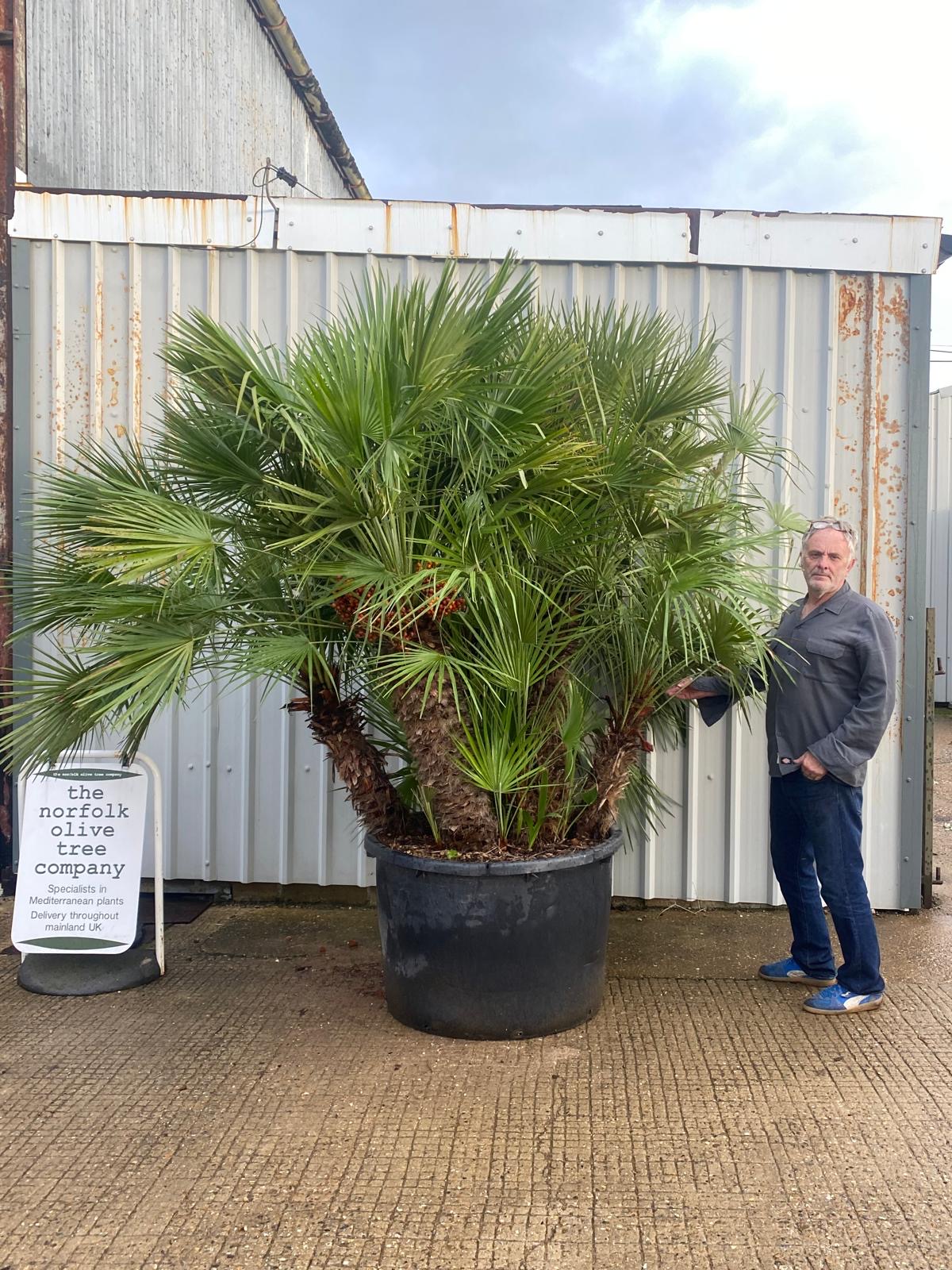
Eight-stemmed Chamaerops humilis – 375-litre specimen
This substantial European fan palm has eight stems, with the tallest reaching approximately 90cm.
Measurements:
- Overall height including pot: 2.50 metres
- Number of stems: 8
- Stem height: up to 90cm
- Container: 375 litres
- Pot dimensions: 1 metre × 65cm
Its eight stems create a particularly full, multi-stemmed appearance, making it an impressive architectural feature.
Seven-stemmed Chamaerops humilis – 375-litre specimen
Our second 375-litre specimen has seven stems, also reaching up to approximately 90cm.
Measurements:
- Overall height including pot: 2.50 metres
- Number of stems: 7
- Stem height: up to 90cm
- Container: 375 litres
- Pot dimensions: 1 metre × 65cm
Although similar in overall dimensions to the eight-stemmed palm, its individual stem arrangement gives it a different natural form.
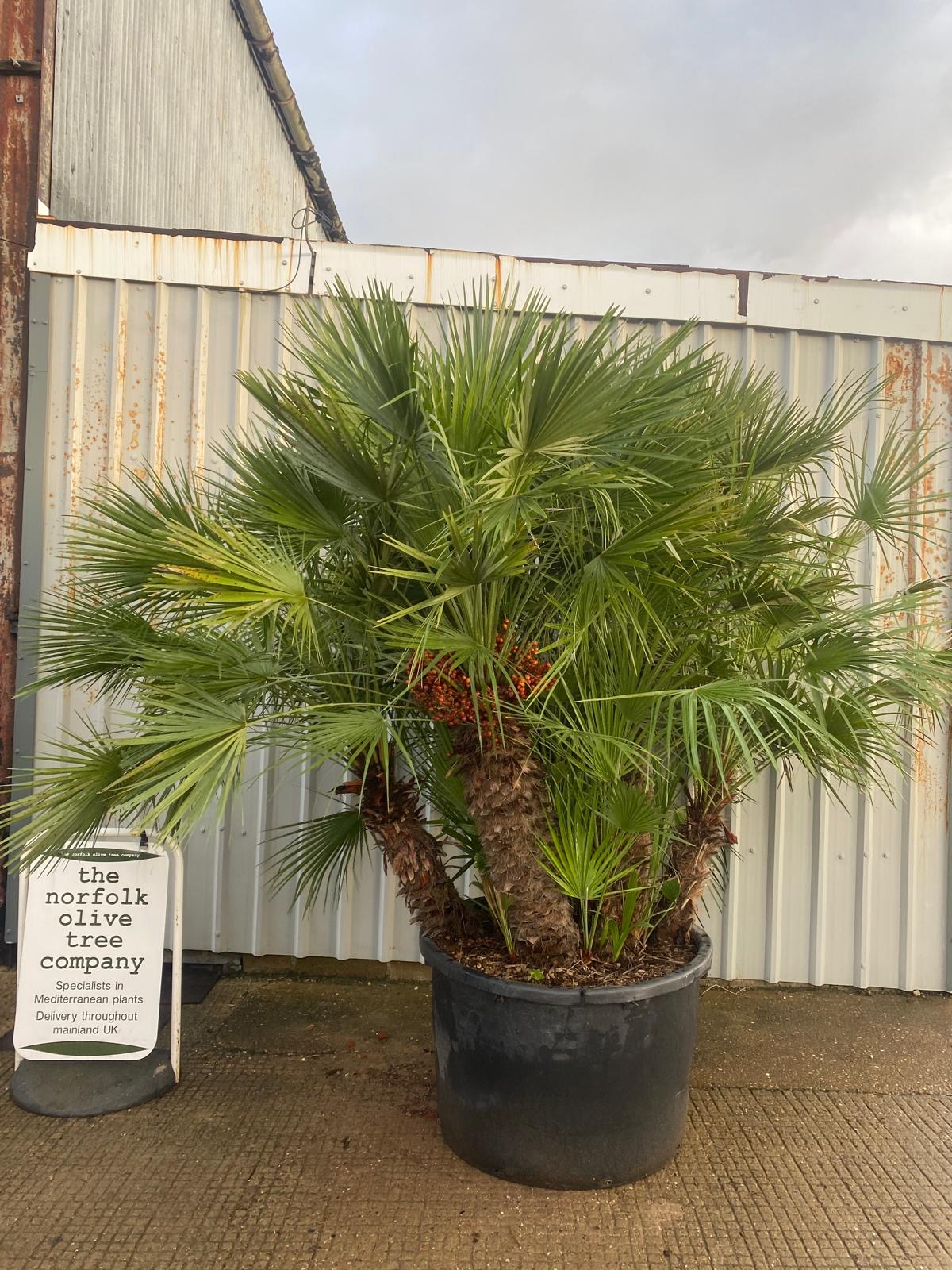
Each of these palms is an individual plant. We recommend looking at the photographs of the actual specimens when choosing, as the character and arrangement of the stems are an important part of their appeal.
Where to use a large Chamaerops humilis in a garden
The European fan palm is a versatile architectural plant, working particularly well where a garden needs evergreen structure and a strong focal point.
Mediterranean gardens
Chamaerops humilis is a natural companion to olive trees, gravel, stone and other Mediterranean plants. Its fan-shaped foliage provides an attractive contrast to the finer leaves of olive trees and the more upright forms of other architectural plants.
Contemporary garden design
The strong outline of a multi-stemmed palm can work beautifully in a contemporary landscape. It can be used to introduce height and texture against rendered walls, natural stone, paving and carefully structured planting.
Courtyards and entrances
A substantial specimen can create an immediate sense of arrival. Its naturally clustered stems make it particularly effective as a standalone feature where there is sufficient room for its foliage to develop.
Coastal gardens
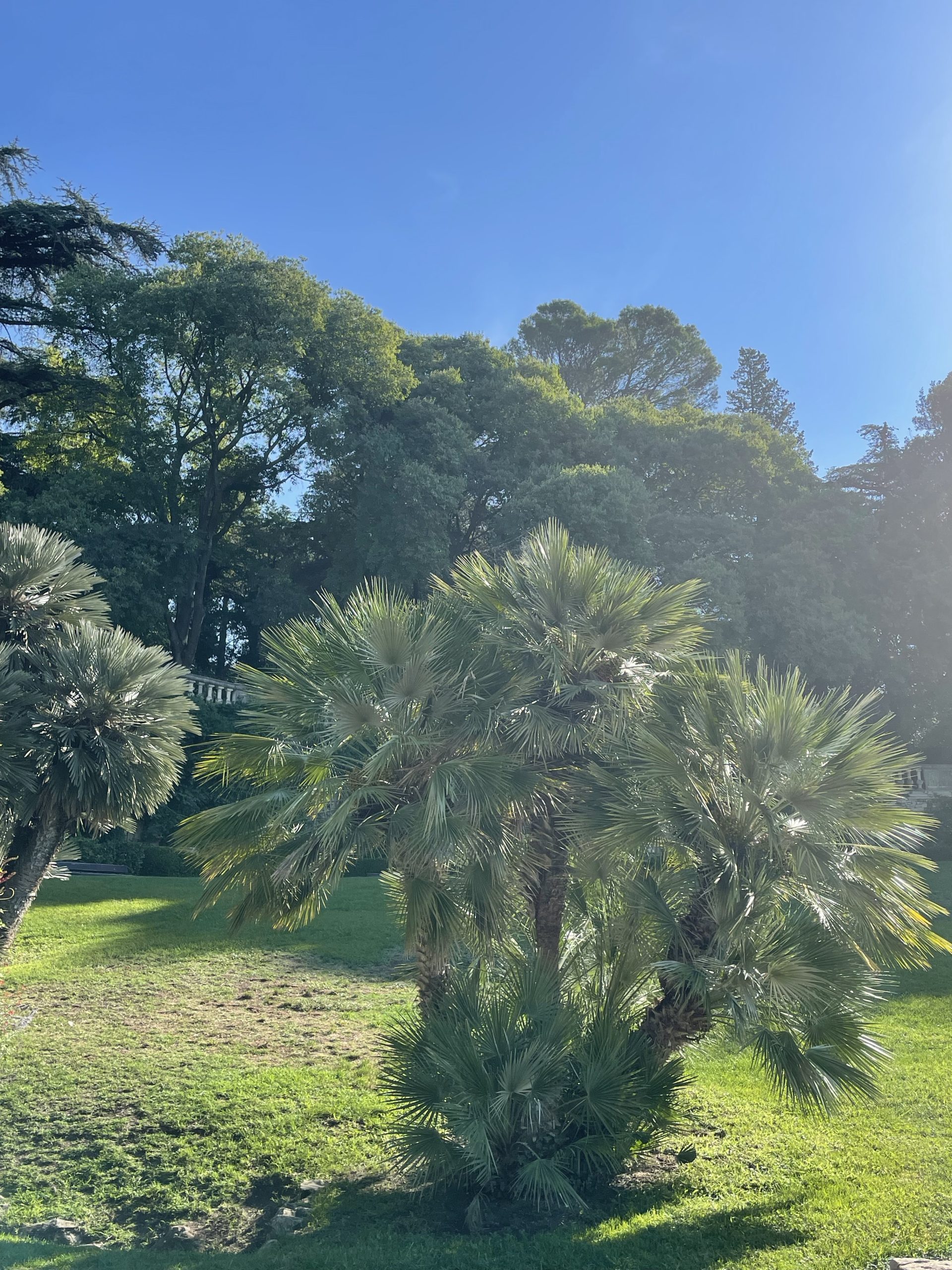
Chamaerops humilis is a useful consideration for coastal planting schemes. Its Mediterranean origins and reputation for tolerating coastal conditions make it an attractive choice for gardens where other plants may struggle. However, local exposure and the severity of winter conditions should always be considered.
Large terraces and containers
European fan palms can also be grown in substantial containers. This can be useful where a permanent planting position is not available, or where a palm is required to provide structure on a large terrace.
With a specimen of this size, it is important to consider the dimensions, weight and stability of the container, as well as access to the intended position.
Is Chamaerops humilis hardy enough for UK gardens?
One of the reasons Chamaerops humilis is so popular in Britain is its relative cold tolerance compared with many other Mediterranean palms.
The RHS gives Chamaerops humilis an H4 hardiness rating, describing it as hardy through most of the UK in its published hardiness classification. Its hardy-palm guidance also notes that established plants can tolerate temperatures around -12°C or lower in suitable conditions.
However, hardiness ratings should be treated as a guide rather than a guarantee. The duration of cold weather, exposure, drainage, maturity and whether a palm is planted in the ground or growing in a container can all influence its ability to withstand winter conditions.

For best results, choose a position with good drainage and suitable shelter. Avoid allowing the roots to remain waterlogged during cold weather.
Large established specimens can offer advantages over young plants, but even mature palms can suffer damage in prolonged severe winters.
What to consider when buying a large palm
A substantial palm is a different purchase from a small nursery plant. Before ordering, it is worth considering more than just its overall height.
Overall height
Check whether the quoted height includes the container. Our three specimens range from 2.50 to 2.65 metres overall, including their pots.
Number and arrangement of stems
The number of stems gives an indication of the plant’s form, but their individual heights and arrangement are equally important.
Container dimensions
Our two largest specimens are supplied in 375-litre containers measuring approximately 1 metre by 65cm. Check that there is sufficient room for the container at the intended planting position.
Space for the foliage
Allow room for the palm’s crowns to develop without becoming crowded by walls, entrances or neighbouring plants.
Access and delivery
Large palms require careful handling. Check gates, pathways, doorways and any restricted access before ordering. It is particularly important to discuss access and positioning arrangements before delivery.
We are happy to discuss the measurements of individual specimens and help customers consider their suitability for a particular garden.
Why buy a mature palm from The Norfolk Olive Tree Company?
The Norfolk Olive Tree Company is a family-run specialist nursery established in 2015, with a particular interest in mature Mediterranean trees, palms and architectural specimen plants.
We select plants carefully, paying attention to their individual shape, form and overall quality. We believe that buying a substantial specimen should be a considered purchase, and we are happy to provide photographs, measurements and specialist guidance to help customers make the right choice.
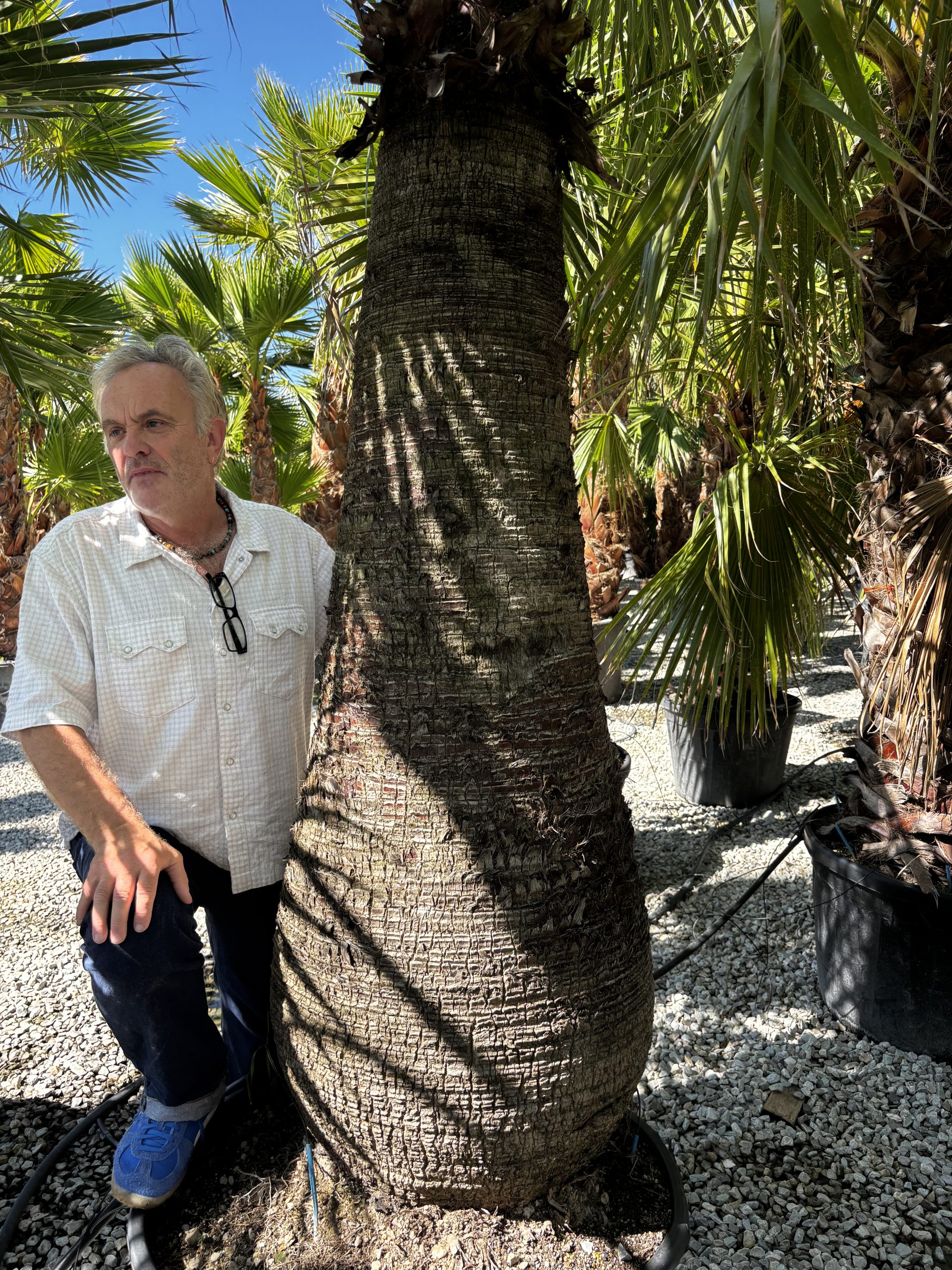
Our family business also benefits from the arboricultural qualifications of Paul and Luca, bringing practical tree knowledge to the selection and handling of larger specimens.
We arrange delivery to your property rather than simply leaving a tree at the roadside. For larger plants, we discuss access and delivery arrangements with customers in advance.
Whether you are creating a Mediterranean garden, introducing structure to a contemporary landscape or looking for an established evergreen focal point, a large Chamaerops humilis is well worth considering.
Explore our architectural palms
Chamaerops humilis is just one of the palms we select for UK gardens. Our wider range includes Trachycarpus fortunei, Butia capitata and the impressive Jubaea chilensis.
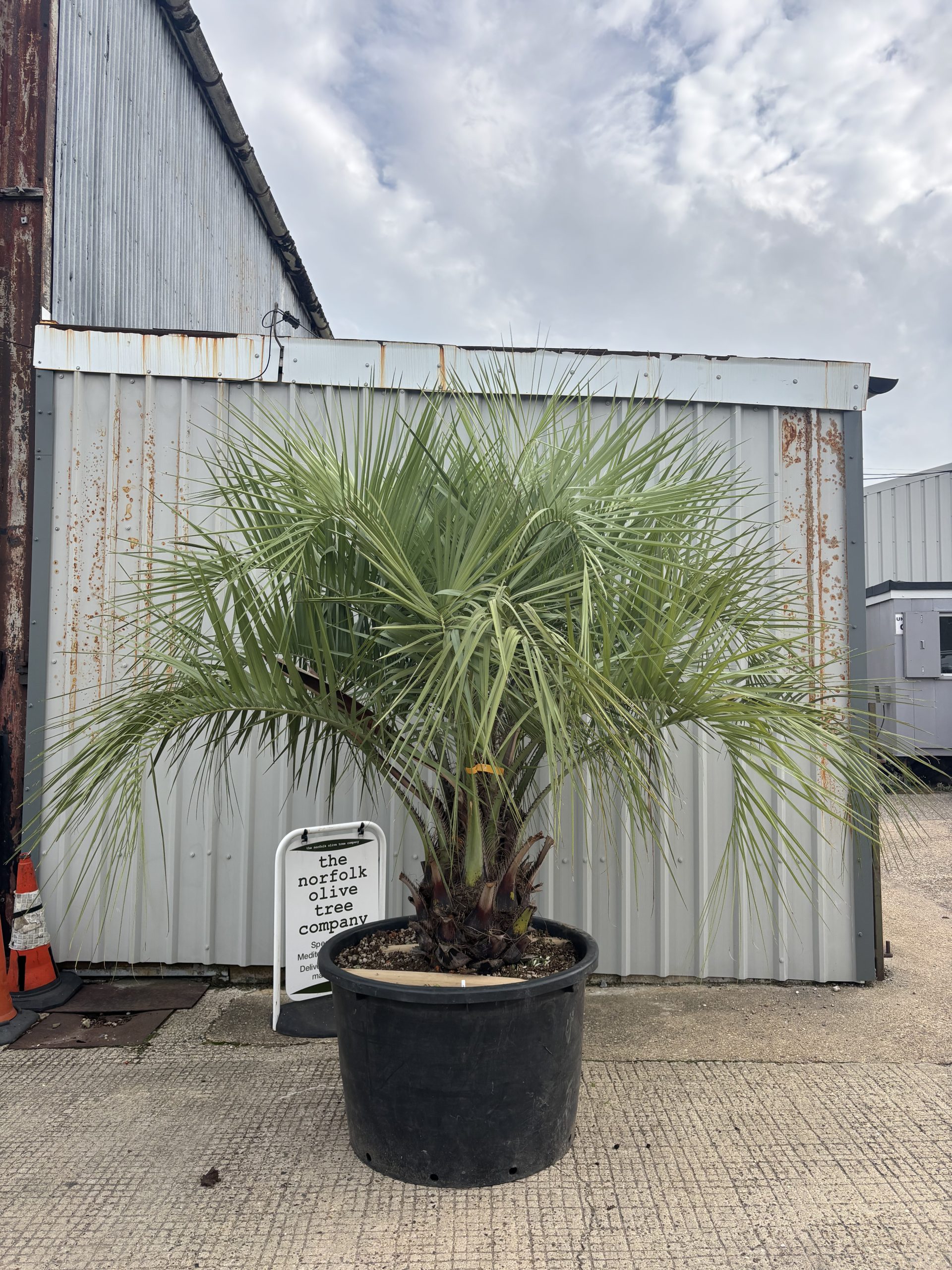
We source palms in a variety of sizes and forms, from younger plants to substantial architectural specimens.
Explore our palm collection at The Norfolk Olive Tree Company, or contact us if you would like to discuss one of our large European fan palms.
Frequently asked questions about Chamaerops humilis
What is Chamaerops humilis?
Chamaerops humilis is an evergreen palm native to the western and central Mediterranean. Commonly known as the European fan palm, it is recognised by its rounded, fan-shaped leaves and naturally multi-stemmed growth habit.
Is Chamaerops humilis hardy in the UK?
Yes. It is one of the more cold-tolerant palms suitable for UK gardens. The RHS gives it an H4 hardiness rating, although winter performance depends on drainage, exposure, maturity and local conditions.
Does Chamaerops humilis grow multiple stems?
Yes. It naturally produces several stems from its base, forming a clump of upright trunks with individual crowns of fan-shaped leaves. This makes established multi-stemmed specimens particularly attractive.
How tall does Chamaerops humilis grow?
The RHS gives a typical eventual height of approximately 1.5–2.5 metres, although individual specimens vary according to growing conditions and maturity. The overall height of a potted specimen will also include its container.
Can Chamaerops humilis grow in a container?
Yes. It can be grown in a suitably large container with good drainage. Substantial specimens require particularly generous containers and careful consideration of their weight and positioning.
Is Chamaerops humilis suitable for coastal gardens?
It can be a useful choice for coastal gardens and is recognised for its tolerance of coastal conditions. However, the precise planting position and local exposure should always be considered.
What is the difference between Chamaerops humilis and Trachycarpus fortunei?
Both are popular palms for UK gardens, but their growth habits are different. Chamaerops humilis naturally develops several stems from its base, whereas Trachycarpus fortunei generally develops a single trunk topped by a crown of fan-shaped leaves.